


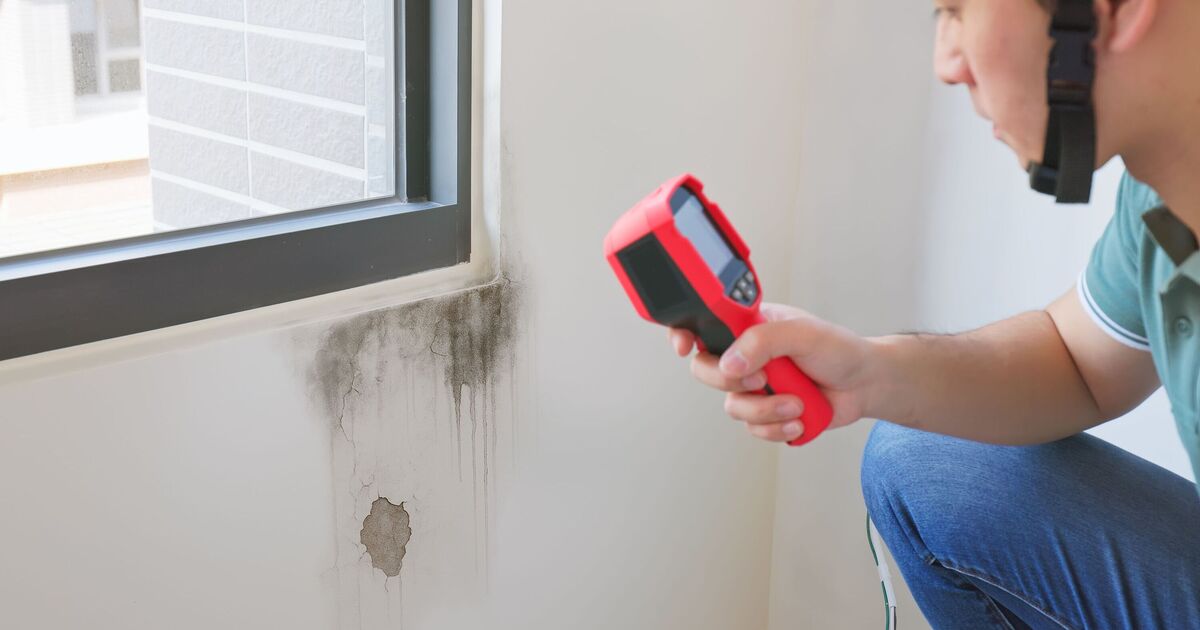
Damp and mould appearing in your home can be a big concern as winter sets in. However, there is an easy way to get rid of the worrying signs without using harsh chemical products.
In winter, many choose to keep their windows shut in an effort to keep the heat in and the cold out. This can cause condensation to build up in homes, though, especially if you are also drying laundry inside. Condensation can be a problem as it causes moisture to sit on surfaces.
This eventually turns to mould, which can cause havoc on wallpaper, paint and furniture. Worse of all, mould can pose a serious health risk.
However, Lucy Steele, an expert from Valspar Paint has shared a simple method to keep mould and dampness out of your home. She uses a household item that many will already have and is inexpensive to buy.
Lucy said: “How you fix the damp depends on the cause of the problem. If you think there’s a problem with your exterior wall, roof or you have rising damp, call a specialist who will help identify the cause and fix the problem.
“However, if it’s something you can tackle at home, try using white vinegar for areas of mould found on porous surfaces. This trick is especially useful if the damp has extended below the surface.
“The vinegar costs as little as £2 and will penetrate to kill the mould and mildew at the root, preventing it from regrowing.”
White vinegar includes acetic acid, which has antifungal properties. The acid can kill bacteria and mould spores that have become buried into walls.
Mould can only grow in an alkaline environment, and white vinegar is acidic, which prevents mould from regrowing once it has been broken down. White vinegar evaporates quickly when applied to a surface, which helps reduce the amount of moisture and dampness in a room.
How to remove damp and mould naturally
To use this trick, simply fill a spray bottle with white vinegar and spray it onto the affected area. Make sure you use a generous amount and then leave it for at least 15 minutes.
If you can wait an hour, you will get better results as it gives the white vinegar more time to kill the spores. When the time is up, make sure you wear a mask and gloves then brush away any visible mould.
It should come away easily. Wipe the wall clean with water and dry it completely with a cloth.
How to prevent damp and mould coming back
Expert Lucy explained the best way to prevent mould from coming back is to monitor wet areas around the home. Make sure rooms are well-ventilated and dry.
She said: “Repairing leaks and also managing ventilation of your home, to get rid of condensation inside windows, for example, is key to preventing black mould from growing.
“Keep problem areas like bathrooms, kitchens, or laundry rooms heated, as this will help to reduce the chances of mould growth simply because mould has an ideal temperature and moisture range in which to live and thrive.”
