


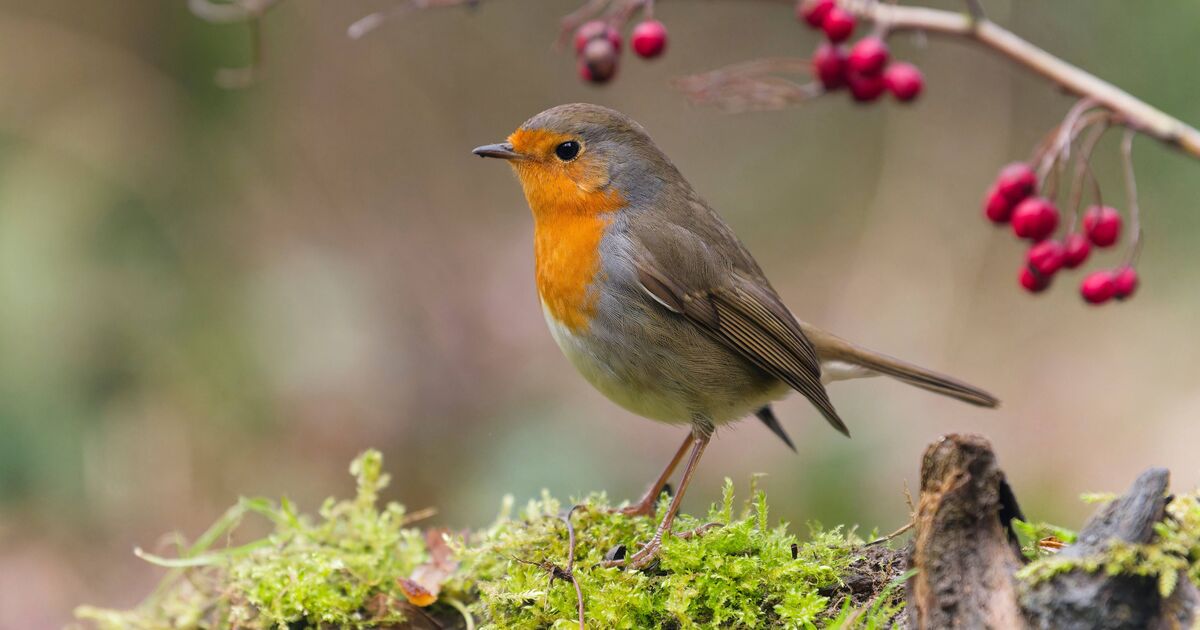
Garden enthusiasts are being advised to steer clear of one particular activity to avoid frightening off robins during the Christmas season. Britain’s most cherished bird is beginning to appear more regularly in outdoor spaces as their distinctive scarlet chest becomes a common sight throughout the holiday period.
A staple on festive greeting cards, this striking creature is instantly identifiable by its orange-red breast that extends upwards to its throat and facial features. Nevertheless, a single alteration to garden maintenance during the colder months could disrupt their nesting sites. Property owners are also encouraged to carefully consider the positioning of bird feeding stations.
Experts at Woodland Trust warned: “Ideally, bird feeders should be positioned around 2m away from dense vegetation. This will reduce the chance of a surprise attack by cats, and means birds can still easily retreat to cover if needed.”
Although robins are remarkably resilient when it comes to nest interference, trimming vegetation can significantly affect their breeding habitat.
These birds have been observed nesting in peculiar and unexpected locations, though they typically favour spots near ground level, within or beneath shrubs. The female constructs a bowl-shaped dwelling using various materials from moss to grass, fallen foliage and twigs.
The reproductive period may commence as soon as January for this winter species, though it more commonly begins around March.
Egg-laying occurs between mid-April and mid-August, with each brood consisting of approximately 4-6 eggs. The incubation period lasts merely 13 days, with young birds departing the nest roughly a fortnight afterwards.
Robins are fiercely protective of their territory, and pruning that exposes their nests can provoke this territorial instinct. Commonly found in woodlands, gardens, parks and hedgerows, robins use song to assert their dominion.
When not nesting, these red-breasted birds are typically quite docile. They’re easily spotted perched atop a branch, feasting on fruits, seeds, insects and earthworms.
They’re frequently seen vigilantly scanning gardens for worms amongst the foliage. Despite their association with Christmas, robins are actually vulnerable to severe winters.
These spirited little birds can lose up to 10% of their body weight during a single frosty winter night. It’s crucial, therefore, that they build up their fat reserves. Bird enthusiasts can assist in this by providing bird food.
