


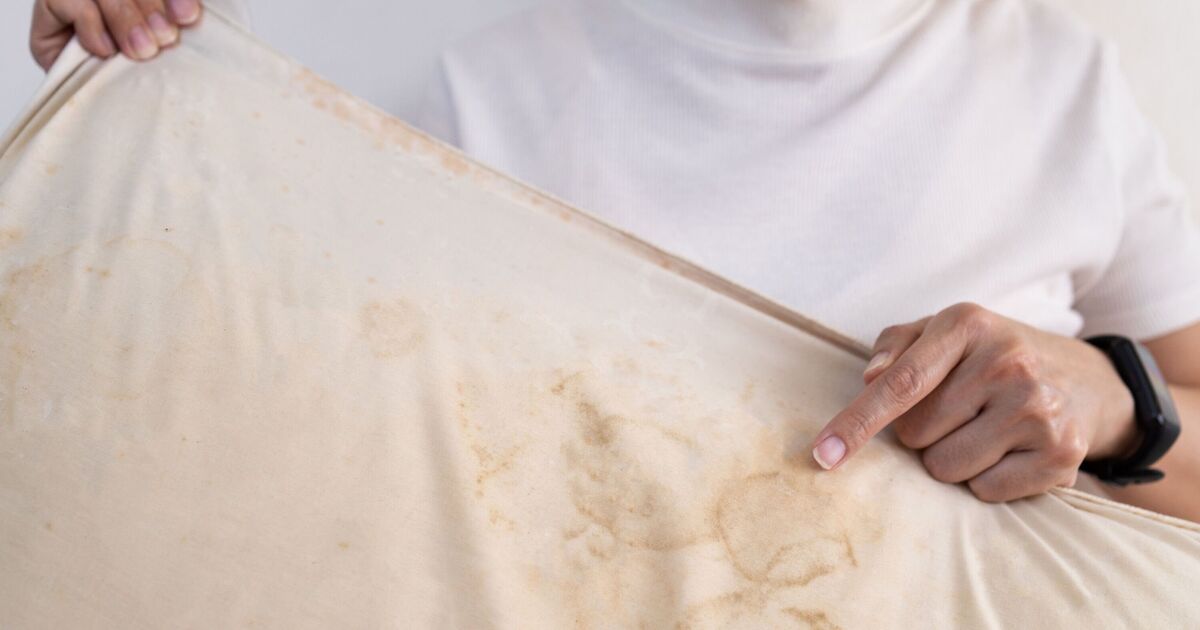
Pillows can turn yellow for a number of reasons, with the most common being sweat. This can make them a hotspot for bacteria to thrive, including bed bugs. It’s a common debate on how often pillows themselves should be washed, but it’s recommended at least twice a year. Throwing your pillow into the washing machine may seem simple, but doing so may distort its shape and ruin it completely.
Instead, experts at Mary’s Kitchen Flour Sack Towels recommended a 70p homemade method to remove stains. This includes using two household staples: baking soda and white vinegar.
To use this method, start by taking off any pillowcases and covers. Then, sprinkle baking soda over the entire surface of the pillow.
Make sure both sides are covered. It may be worth stripping your bedding at the same time and cleaning the mattress.
Mix some water and white vinegar in a 1:2 ratio in a spray bottle before spritzing the pillow.
Leave it to work for 30 minutes before taking a vacuum and removing the baking soda and any debris.
The pros said: “If the weather permits, you can place the pillows in the sun to air dry. Sunlight has natural disinfectant properties and can help eliminate lingering odours.
“Give the pillows a good fluffing and rotate them to ensure even cleaning and drying.
“While the presence of bacteria on pillows may sound alarming, it’s important to remember that most of these bacteria are harmless.
“Some bacteria actually help to protect us from harmful pathogens. The recommended cleaning frequency for pillows varies based on their type.
“Synthetic pillows can generally be washed every three to six months, maintaining a regular cleaning routine.”
Down and feather pillows are best suited to dry cleaning every six to 12 months, whilst memory foam pillows should be spot-cleaned.
Some pillows are even suitable for cleaning in the washing machine, while others can be submerged in the bath, but always check the care label to ensure proper cleaning.
