


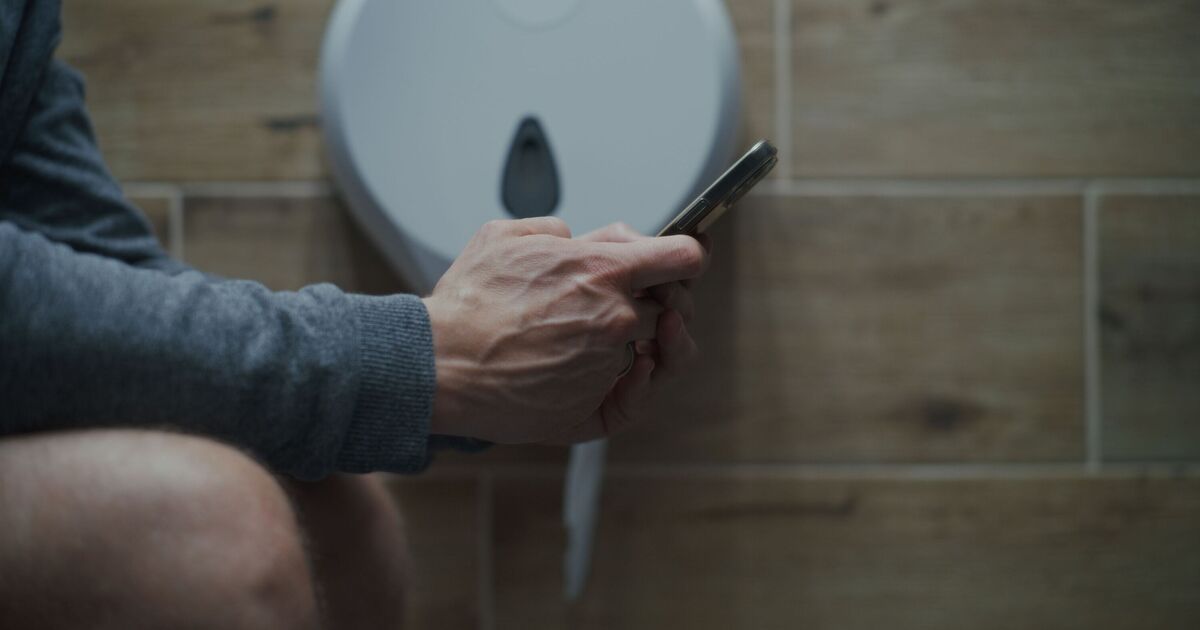
An NHS GP has shared an important reminder about a common bathroom habit, stressing a key ’10-minute’ rule that everyone should follow. Dr Karan Rajan, who is also an NHS surgeon and the author of the Sunday Times number one bestseller This Book May Save Your Life, issued the warning to raise awareness of something many may not know.
Dr Rajan highlighted the risks of sitting on the toilet for too long and straining excessively, explaining that even if this feels normal and you enjoy sitting there scrolling on your phone, you’re unknowingly causing health issues which may cause you pain.
He warned that lingering on the toilet increases pressure on the rectum and bottom, pointing out that smartphones aren’t the only distraction responsible. The same problem occurs when using a tablet or even reading a newspaper.
The medical expert explained that many people may not be aware, but even the shape of the toilet seat can cause issues. He said: “Because the toilet seat is cut, your rectum is dangling lower than the rest of your backside.”
As a result, gravity causes blood to pool in the rectal veins. He further explained: “Gravity takes over and blood begins to pool, collect and clot in these rectal veins. Add in some straining and pushing, and this leads to even more pressure, causing the veins to bulge, resulting in haemorrhoids, also known as piles or bum grapes.”
“Basically, bulging blood vessels around your bum. Haemorrhoids lead to pain, itching and bleeding”. In fact, according to the NHS, other signs of this include:
bright red blood after you pooan itchy anusfeeling like you still need to poo after going to the toiletmucus in your underwear or on toilet paper after wiping your bottomlumps around your anuspain around your anus
Noting his “take-home points”, the doctor concluded that you should only ever go to the toilet when you need to. You should also avoid straining and never spend longer than 10 minutes on the toilet.
It is essential to know when to seek medical advice for haemorrhoids (piles). Depending on the severity of your symptoms, you should take the following actions:
See a GP if:
Symptoms do not improve after 7 days of self-treatment
You keep getting piles (recurrent episodes)
You notice any unusual changes around your anus that are not normal for you
Request an urgent GP appointment or call NHS 111 if:
You have a very high temperature or feel generally unwell (feverish, hot, cold, or shivery)
There is pus leaking from your piles
Call 999 or go to A&E if:
You are bleeding non-stop or there is a significant amount of blood
The toilet water turns red or you see large blood clots
You are experiencing severe pain
