


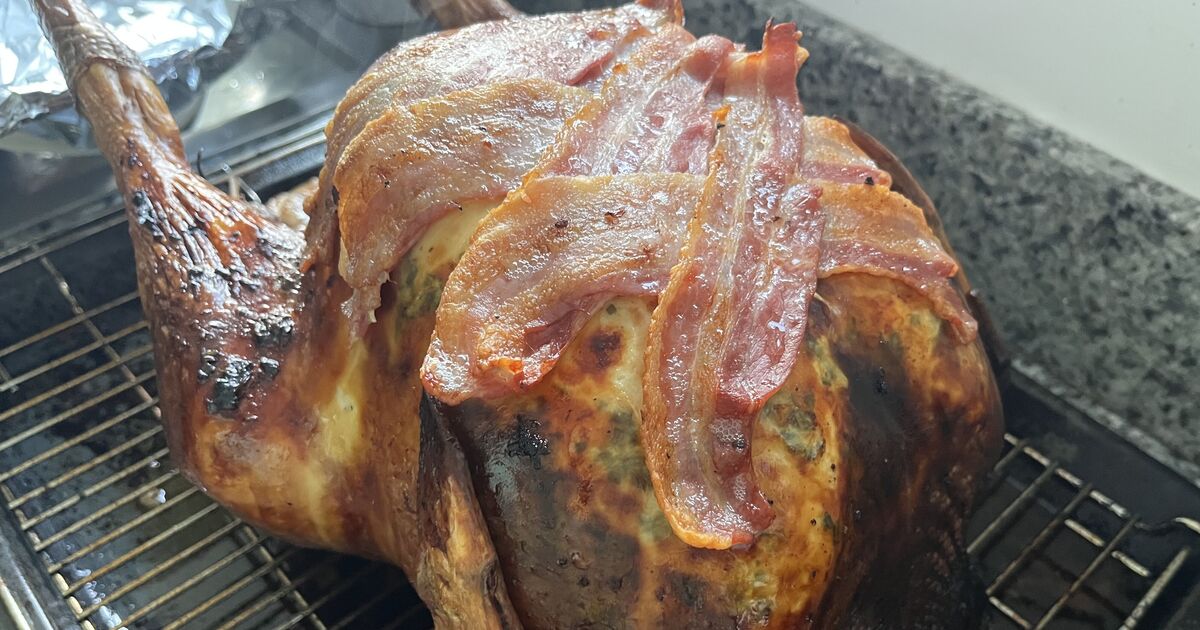

Turkey is a staple at Christmas, so to make it extra juicy, we added one step to the cooking process (Image: Ellen Jenne)
Christmas has been and gone for another year, and I am exhausted. Every year, my mum and I spend Christmas Eve working like elves to make sure the rest of the family have something to feast on on the big day.
Turkey can be a divisive meat to serve at Christmas, with many people, including myself, disappointed with its lack of flavour. Fortunately, we’ve never suffered from a dry bird, but understand this can be a common mistake when cooking. Instead, we decided to add one extra step to the cooking preparation to achieve an extra juicy bird: brining.
READ MORE: Use turkey leftovers using delicious method with ‘cosy’ winter recipe
READ MORE: Leftover Christmas veggies won’t go to waste if you do simple traybake recipe

Load up a bucket with all of the festive spices (Image: Ellen Jenne)
This year we took inspiration from the festive goddess herself, Nigella Lawson, as well as a tutorial I’d seen from potato queen Poppy O’Toole, who spoke of the benefits of a dry brine and compound butter. Although Mum wasn’t entirely convinced on the “dry” part.
In the end, we stuck to Nigella’s two-day long brining process, plus extra lashings of butter for just before roasting. The veteran chef argued that for her, “the only turkey is a brined turkey”.
This extra step of steeping the bird in a bucket of flavourful liquid will help to tenderise the meat, making the cooking turkey more moist with no fear of drying out. Plus all of the seasonings and spices will help to give the bland bird a subtle yet spiced flavour.
There’s never been anything wrong with the turkeys we’ve served in previous years, but whenever Christmas comes around, Mum and I always find ourselves unimpressed with such a lacklustre bird.

The turkey after a day and a half of brining, ready for the oven (Image: Ellen Jenne)
Nigella wrote in her book: “You have only to try this method to be utterly convinced. And I mean to say: how hard is it to fill a pan or large plastic bin or bucket with water and spices and lower a turkey into it? At this time of year, it’s fine just to leave it in a very cold place. Before I had a garden, I put mine by an open window in the kitchen. It does mean everyone freezes, but who am I going to put first — my turkey or my family?”
The process started on Tuesday, December 23, after Mum picked up the turkey from the supermarket. Having cleaned out a bucket usually reserved for cleaning or washing cars, we added in the novel-length list of ingredients Nigella detailed. The only thing we left out were the cinnamon stick and star anise, as the supermarket had run out.
However, I think all of the other ingredients are enough to allow for the few missing ingredients. The whole thing takes a maximum of 10 minutes to do, and because we did it a few days in advance, we knew we could take our time. If you are doing preparation in advance, this won’t take your timeline off kilter.

The turkey develops a gorgeous golden brown colour (Image: Ellen Jenne)
For time, overnight will do just fine. The turkey has to be left in a cold place, so we strategically placed it in our porch, which is essentially a walk-in freezer this time of year.
Fast forward to Christmas morning, the bird is removed from the brining liquid and dried. This needs to be done between one to two hours before it’s due to roast in the oven.
Nigella’s recipe uses a basting glaze made from goose fat or butter and maple syrup. Instead, we added an unholy amount of softened butter in between the skin and the flesh, with a little bit of seasoning for a last bit of flavour, and some rashers of bacon on the top for good measure.
We took some cooking advice from Jamie Oliver, who recommended cooking the turkey for two and a half hours. One hour on a fan at 200℃ while the tin foil was on, before turning it to convection at the same temperature to ensure the bird cooked without browning too much, and then once the tin foil is removed, a further half an hour to crisp up the bacon.

The turkey went down a treat – Merry Christmas! (Image: Ellen Jenne)
Once finally removed from the oven, I could already tell the bird was much more golden than it had been in previous years. The aroma told us “Christmas is here!”.
We had a couple of hours to kill before the festivities started, which allowed the turkey a final rest before serving. Upon serving, the carving knife melted through the turkey.
Despite all the flack turkey may get, Christmas wouldn’t be complete without it. I could taste the subtle flavours of all the spices and seasonings which had been added, but not enough to overwhelm the bird’s delicate flavour.
Was the turkey moist? Yes. But was it the moistest turkey we’ve ever eaten? I don’t think so. The turkey certainly wasn’t dry, but the results weren’t quite as Nigella had promised.
No one around the Christmas table was disappointed with the result, by any means. Plates were piled high with slices of turkey and our homemade honey and peppercorn glazed ham.
Would I try Nigella’s method again? Yes, but maybe brine it for slightly longer to see if timing makes a difference.
Spice and Super Juicy Roast Turkey
Ingredients
Approx. six litres waterOne large orange or 2 smaller (quartered)250 grams fine sea saltThree tbsp black peppercornsOne bouquet garniOne cinnamon stickOne tbsp caraway seedsFour clovesTwo tbsp allspice berriesFour star aniseTwo tbsp white mustard seeds200 grams sugarTwo onions, unpeeled and quarteredOne 6cm piece of fresh ginger, unpeeled and cut into six slicesFour tbsp maple syrupFour tbsp runny honeyStalks from one bunch fresh parsleyOne x 5.5kg turkey
For the Basting Glaze
75 grams goose fat (or butter)Three tbsp maple syrup
Method
Put the water into your largest cooking pot or a clean bucket or plastic bin. Squeeze the juice from the orange quarters into the water before you chuck the husks in, then add all the other ingredients, stirring to combine the salt, sugar, syrup and runny honey.
Remove any string or trussing from the turkey, shake it free, remove the giblets, if not already done, and put them in the fridge (or straightaway set about making the stock for the gravy), then add the bird to the liquid, topping up with more water if it is not completely submerged.
Keep covered in a cold place, even outside overnight or for up to a day or two (and see intro) before you cook it, remembering to take it out of its liquid (and wipe it dry with kitchen paper) one to two hours before it has to go into the oven.
Read the Important Note below, and preheat the oven to 200°C/180°C Fan/gas mark 6/400ºF.
Melt the goose fat (or butter) and maple syrup together slowly over a low heat. Paint the turkey with the glaze before roasting in the oven, and baste periodically throughout the cooking time.
Roast for two and a half hours. When you think it’s ready, pierce the turkey with the point of a sharp knife where the body meets the leg, and if the juices run clear, it’s cooked; if still pink, cook it for longer until they run clear, or use a meat thermometer.
