


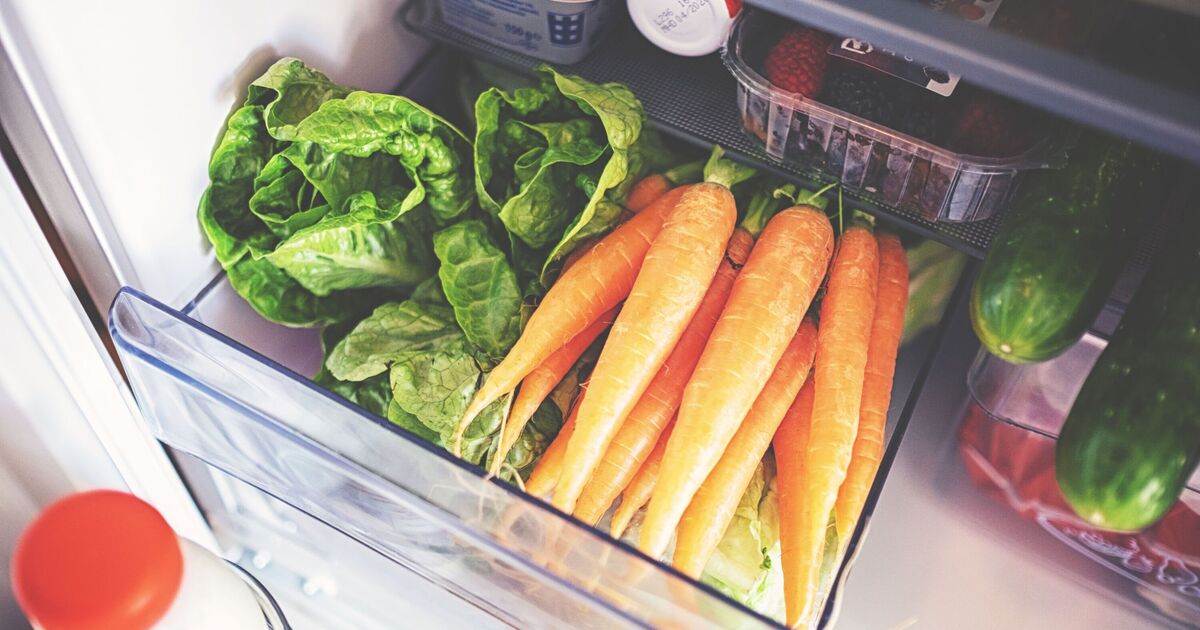
Carrots are a staple on every grocery list, and few things are more frustrating than purchasing fresh vegetables only to find them turning mouldy or slimy within days. Yet it seems carrots might be deteriorating more quickly than necessary because we’ve been storing them incorrectly – it turns out the fridge drawer isn’t their ideal home after all. Amanda Rocchio, a nutritionist, coach and culinary expert, has taken to social media to reveal there’s a “proper way” to preserve your carrots for maximum freshness.
In her TikTok video, Amanda explained: “You’ve probably been storing your carrots the wrong way, let me show you the right thing to do. Whether you prefer to buy whole carrots or prefer to grab a bag of baby carrots, you’re probably tossing them in a fridge drawer.”
But Amanda revealed the optimal method for maintaining carrot crispness is to remove them from their original packaging, submerge them in a water-filled container, and position them centrally in your refrigerator.
Amanda advised: “The key is to place them in a container and fill it up with water. They can last four weeks this way.”
Store your carrots in a lidded, water-filled vessel, as exposure to the general moisture within the fridge will cause them to deteriorate prematurely.
Remember to refresh the water every five to six days to significantly help maintain the carrots’ crispness and quality.
This technique will keep them fresh and dramatically prolong their shelf life for several weeks, potentially saving you a considerable amount on your weekly shop.
Carrots can enjoy a significantly extended lifespan when stored in a container filled with water, as they require a balance of humidity and a consistent temperature.
Storing them in a fridge drawer can lead to fluctuations in temperature due to the drawer being opened and closed, which can negatively affect the quality and shelf life of the carrots.
Moreover, carrots are particularly sensitive to changes in humidity. The vegetable drawer in a fridge is designed to maintain higher humidity levels than the rest of the appliance, which may not be ideal for carrots.
Excessive humidity can cause carrots to become mouldy, while insufficient humidity can lead to dehydration and deterioration.
Amanda’s advice sparked surprise among her followers, many of whom realised they had been storing their carrots incorrectly for years.
One user confessed: “I have learned that I don’t know how to adult. I haven’t stored anything correctly so far!”.
Another chimed in: “This is very true. I started doing this and it was amazing how long the carrots lasted.”
A third person added: “This is a great idea and it works. I also found out it works great with celery as well!”
