



I tested 5 different laundry drying methods in winter — only 1 stops musty smells (Image: Getty)
Drying clothes indoors sounds simple, but anyone who’s battled damp winters, slow-drying items and that unmistakable musty smell knows it’s anything but. With energy costs still on people’s minds and many of us without access to outdoor drying space, I decided to properly compare five common indoor options: a tumble dryer, dehumidifier, heated airer, clothes horse and bathroom extractor fan.
I used all five in real-life conditions, through winter weather, heavy washes and hard-to-dry items such as hoodies and jeans. I tested each method for drying time, freshness, cost and how much moisture it added to the room. Here’s my honest verdict – and why only one method truly stopped clothes from smelling musty.
Read more: Make hard towels fluffy again using natural towel softening method
Read more: Dehumidifiers will work better when placed away from common household items

The idea seems straightforward: hang clothes in the bathroom and run the extractor fan to pull moisture (Image: Getty)
Bathroom drying with an extractor fan
The idea seems straightforward: hang clothes in the bathroom and run the extractor fan to pull moisture out as they dry.
Pros
If you have a powerful extractor fan, it can keep humidity away from living areas and bedrooms, which is a plus in smaller homes or flats.
Cons
I think the effectiveness of this method depends almost entirely on the fan. The fan in my bathroom is not particularly strong, designed for short bursts during showers, not for running continuously for hours while laundry dries.
If you need to take a shower, the whole method becomes pointless, as it adds extra moisture to the air. There was also barely any space in my bathroom to put up a clothes horse, and little places to hang clothes.
Bathrooms also tend to be cooler, especially in winter, which slows evaporation further unless the heating is on.
Verdict – 2/10
It may seem like a good idea on paper, but this method proved to be the least effective at drying clothes.

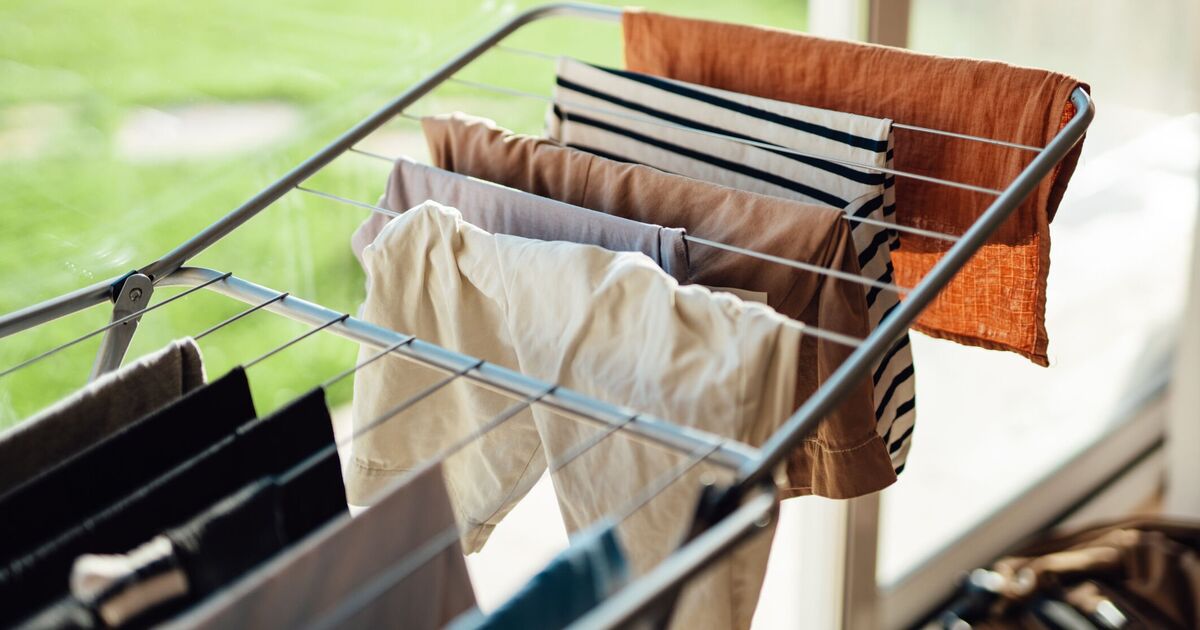
While the most basic, a standard clothes horse is the cheapest (Image: Getty)
Standard clothes horse
While the most basic method, it’s by far the cheapest.
Pros
In theory, this option is the simplest and cost-free. A clothes horse can be picked up for around a tenner, and when placed near a radiator, it’s a really cheap option to dry clothes if you are on a budget.
You don’t need to use any electricity, which is a bonus.
Cons
Clothes take a long time to dry with this method. Without any added heat or forced airflow, I found the moisture sat in the fabric for long periods. Thicker areas like waistbands, cuffs, seams and towels stayed damp for days, even when the clothes felt dry on the surface.
The longer the clothes took to dry, the more musty or sour they smelt. I ended up with clothes that smelt awful. It also caused air to escape into my spare room, causing windows to mist up and droplets to form. It also takes up floor space for days at a time.
Verdict – 3/10
While it’s affordable, the standard clothes horse was the worst for musty smells.
Heated airer
On the surface, they sound ideal: plug it in, hang your clothes and let the heat do the work.
Pros
The heated airer is often marketed as a budget-friendly alternative to a tumble dryer. For light use or small items, it seems good on paper. I purchased the Minky Wing 12m Heated Clothes Airer with Cover, available for £60 at Argos.
I found the clothes dried marginally faster than a standard clothes horse — but only just.
Cons
In reality, it just didn’t work as well as promised. Clothes only dried properly where they were directly touching the heated rails, leading to very uneven results. Towels and thicker areas on clothes stayed damp for far too long. It comes with a cover that supposedly helps retain heat, but I didn’t notice a significant difference whether it was on or off.
Because drying took so long, clothes often developed a noticeable mildew or mouldy smell. It also did nothing to reduce condensation in the room, which made the whole space feel damp. At £60, it’s still quite expensive, and in my opinion, you’d be better off saving your money and just buying a drying rack that isn’t heated and placing it next to a radiator.
Verdict – 4/10
The heated airer was far too expensive for the results it produced.

Coming in at second place for drying clothes effectively is the dehumidifier (Image: Getty)
Dehumidifier
Coming in at second place for drying clothes effectively is the dehumidifier.
Pros
The dehumidifier came in as the second-best option and is significantly cheaper to run than a tumble dryer. It has the added bonus of tackling condensation, mould and mildew at the same time.
Clothes dried relatively quickly compared to passive air drying, especially when placed in a small room with the doors closed. A good-quality model makes a noticeable difference – mine is from Meaco, which is often recommended for laundry drying. I bought my dehumidifier two years ago, but a similar model on John Lewis costs £159.99.
Cons
Even with a decent machine, clothes still took one to two days to fully dry, particularly in winter. That extra time is where the musty smell creeps in, especially on thicker fabrics.
To achieve good results, you need to spend more upfront on a powerful model, which may offset some of the savings for those on a tight budget.
Verdict – 7/10
A dehumidifier is a solid all-rounder and great for reducing condensation, but it still didn’t fully solve the musty smell issue during the colder months.

I found the tumble dryer the best option for drying clothes, but also the most expensive (Image: Getty)
Tumble dryer
I found the tumble dryer the best option for drying clothes, but also the most expensive.
Pros
The tumble dryer was the only option that completely eliminated musty smells. Clothes came out properly dry, warm and ready to wear the same day, which made a huge difference compared to the other methods. This is especially handy if you have a big family with lots of items to wash on a regular basis. The tumble dryer I have is a Hotpoint Condenser model that collects water in an easy-to-empty tub.
It easily handled large, awkward items like bed sheets, towels and hoodies – things that tend to stay damp forever when air-dried indoors. I could wash and dry a full load in one day, which is invaluable if you don’t have space for laundry hanging around.
Cons
There’s no getting around the cost. Running a tumble dryer is more expensive than the other options, particularly if you have a condenser model like mine, which uses more energy than a heat pump dryer per cycle. You also need the space for it, which isn’t always realistic in smaller homes or flats.
Safety is another consideration – filters require regular cleaning, and you must be mindful of their positioning and usage.
Verdict – 9/10
If your top priority is fresh-smelling clothes that dry quickly, a tumble dryer is unmatched. It’s the most effective and reliable option, especially in winter. Just be mindful of the cost.
