


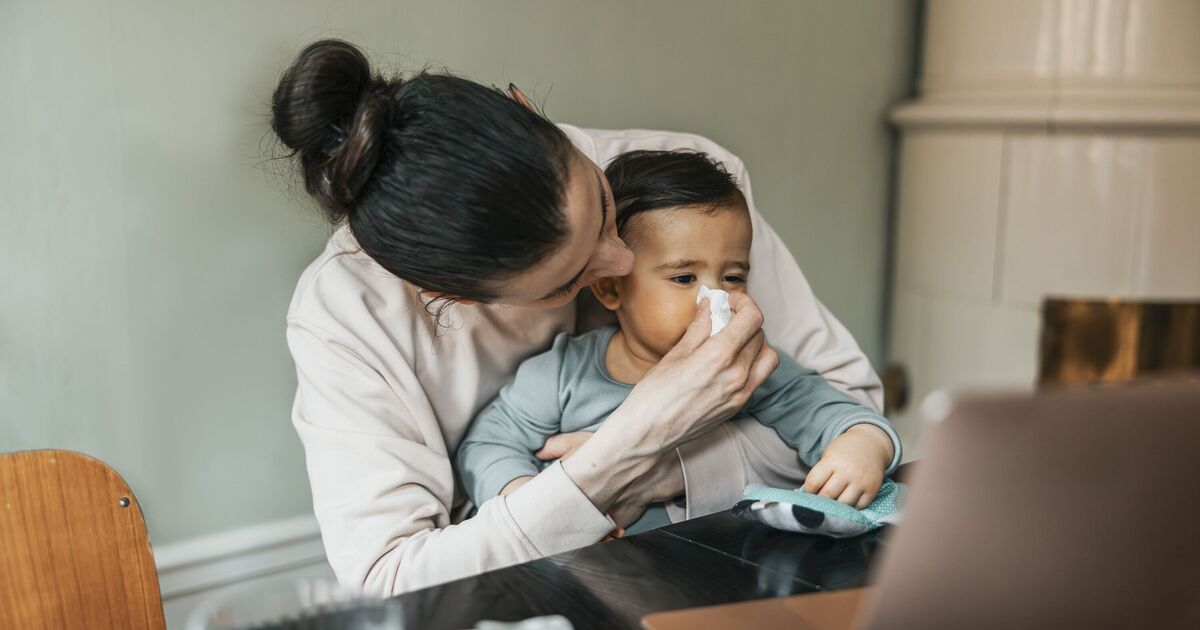

Parents have been told to not do 1 thing when their babies get ill (stock image) (Image: Getty)
As children go back to school or nursery, the likelihood of picking up illnesses increases. If your child or baby under two is developing a cold, there are steps you can take to help ease their symptoms.
While we’ve all experienced having a cold, it can be quite different when your baby or toddler falls ill. Respiratory syncytial virus (RSV) is among the most prevalent viruses causing coughs and colds during winter, and is the same virus responsible for the ‘common cold’. If left untreated in children under two, it can progress to bronchiolitis. The symptoms are typically mild and manageable at home.
In mild RSV cases, symptoms generally improve on their own within one to two weeks. Bronchiolitis symptoms tend to peak between days three and five, though coughs typically clear up within three weeks.
To help, an NHS doctor, Dr Ahmed Ezzat, has revealed his top five recommendations for easing your child’s symptoms from home.
“How to treat RSV and bronchiolitis,” he explained at the beginning of his video.
1. Manage fevers
For his first tip, Dr Ezzat recommends using ibuprofen or paracetamol, such as Calpol, to help treat any fevers and discomforts caused by the virus. But make sure to always follow the instructions on the packet.
“If your child has a high temperature and is uncomfortable, give children ibuprofen or paracetamol,” he said. “Always check the label to make sure that is is suitable for your child.”
Meanwhile, he urges parents to not try to lower their temperature by spooning cold water over them or taking off all of their clothes to cool them down. This is because younger kids can’t regulate their body temperature as efficiently as adults.
2. Saline nose drops for blocked nose
If you find your child has a blocked nose, Dr Ezzat recommends using a saline nose drops from a pharmacy to help ease symptoms.
These saline nose drops can help loosen dried snot and relieve a stuffy nose. If you want to know more, you can go to your pharmacist, GP, or health visitors to ask for more advice.
Read more: Full list of RSV symptoms as cases spike across UK
Read more: UKHSA warns ‘time is running out’ as two viruses explode in UK
3. Encourage them to drink more
You should also encourage your child to drink plenty of fluids to keep them hydrated, as it helps their bodies fight off the virus. Staying hydrated when ill also thins mucus to clear airways, regulates fevers, flushes waste, moisturises membranes (skin, nose, mouth) to block germs from entering the body, while also prevents dehydration from increased fluid loss due to fevers or vomiting.
“Try smaller feeds in babies more often. And in older children, give them extra water or diluted fruit juice,” he suggested.
Additionally, you can encourage them to consume more water-rich foods such as fruits and vegetables.
4. Keep them upright
Dr Ezzat advises parents to ensure their little ones remain in an upright position, either sitting or standing, as much as possible while they’re awake. This will aid in easier breathing, particularly if they have a blocked nose.
Staying upright or elevating the head during illness allows gravity to assist with drainage, preventing mucus from accumulating in the sinuses and throat, thereby reducing congestion, sinus pressure, and bouts of coughing.
Lying completely flat can lead to postnasal drip, making it more difficult to breathe and sleep, whereas being upright helps maintain clearer airways.
5. Ensure they get enough rest
Lastly, just as with adults, it’s crucial to ensure your child gets plenty of rest when they’re ill to expedite recovery.
Rest allows their immune system to concentrate its energy on combating the virus and aids faster recovery by conserving energy, preventing complications, and minimising the spread of germs.
If your young child or baby is exhibiting any cold-like symptoms or fevers, the NHS advises calling your GP to request an emergency appointment, or dialling 111 for advice.
Meanwhile, if they’re struggling to breathe, pausing their breathing, or becoming limp and unable to stay awake, the NHS advises to trust your instincts and dial 999 for immediate assistance.
