


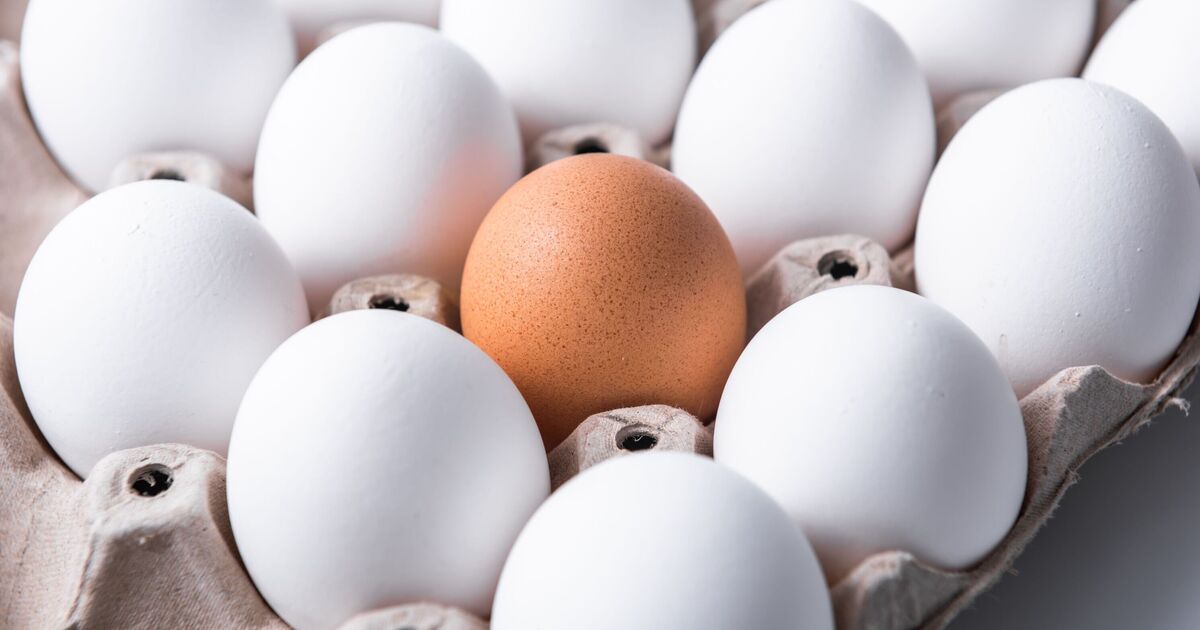

I asked experts the difference between white eggs and brown eggs — it all comes down to 1 thing (Image: Getty)
We’ve all experienced that moment of surprise when you open your box of eggs from the supermarket, farm shop or local market to find something you weren’t expecting: white eggs.
Most supermarket eggs tend to be brown so it can seem unusual to get a box of white (or even mixed) eggs and you may wonder if they taste different, need to be cooked differently or have any differences in terms of their health benefits or nutritional properties. To feed the enormous demand from shoppers for eggs, hens lay around 300 a year, starting from when they’re around 19 weeks old.
I decided to find out once and for all if there was any difference between brown eggs and white eggs. I asked several experts and they were unanimous in their response.
Read more: I shop at M&S but couldn’t believe the price of one crisp item
Read more: UK’s ‘most confusing roundabout’ has 48 traffic lights and cars going wrong way
Richard Mew, of Bird Brothers, a Bedfordshire-based egg producer, said: “The difference between white eggs and brown eggs is simple: white eggs come from white hens, while brown eggs come from brown hens. But when it comes to taste and cooking instructions there is no difference.”
Henry O’Connor, creator of Better Eggs, a UK brand committed to high-quality eggs and hen welfare, said: “White eggs are mostly laid by hens with lighter feathers and earlobes, while brown eggs usually come from darker-feathered hens with red earlobes. That’s it. The difference is purely cosmetic — it has zero impact on what’s inside the egg.”
The British Egg Information Service also said the colour of the egg shell is dependent only on the breed of the hen. It said: “In general, white hens produce white eggs and brown hens brown eggs.”
Paul Mason, head of food at the healthy meal prep delivery service Prep Kitchen, said: “The shell colour comes down entirely to the breed of the hen. White-feathered hens tend to lay white eggs, brown-feathered hens lay brown ones.”
Rebbecca Tonks, CEO of St Ewe Free Range Eggs, said: “The colour of an eggs shell is genetic and dependent on the breed of hen and not a sign of quality, contrary to what many have been led to believe. As a general rule of thumb, white eggs come from white hens and brown eggs from brown hens.”
Lindsey Chastain, who runs The Waddle and Cluck website from the homestead where she raises chickens, said: “The only difference between white and brown eggs is the chicken. There is no other difference.”
But there is a surprising way of finding out what colour egg a hen will lay. Charlotte Thomas, regional assessment manager at RSPCA Assured, said: “It sounds strange but it’s true – the colour of a hen’s earlobes will often match the colour of her eggs. So dark coloured earlobes normally mean brown eggs, while lighter-lobed birds lay white ones.”
Are white eggs higher quality than brown eggs?
Henry O’Connor of Better Eggs said: “Despite what many shoppers believe, shell colour has nothing to do with quality.”
Kathy Beget of Beyond the Chicken Coop, who has been raising chickens for more than 20 years, said: “The quality and taste of the eggs do not vary by colour. Instead, the quality varies by how the chickens are raised and what they are fed. Every single egg, regardless of colour, can be cooked the same way.”
Is one egg colour better for you?
Destini Moody, a board-certified specialist in sports dietetics at Flex Therapist CEUs, who has provided nutrition counselling for athletes including the San Francisco Giants and the NBA over the past eight years, said: “White and brown eggs are essentially the same. You’re getting high-quality protein, strong amino acid profile and nutrients like choline, vitamin B12, iodine and selenium. Both white and brown shells can exist as omega-3 eggs or higher vitamin D eggs.”
The British Egg Information Service said: “There are no nutritional differences between brown or white eggs. Eggs are a natural, nutritionally dense food containing vitamins, minerals and high-quality protein in less than 80 calories, whatever the colour.”
Paul Mason of Prep Kitchen said: “People have very strong opinions about egg colour, usually because of something they were told years ago. A common one is that brown eggs are healthier and white eggs are somehow ‘processed’. I hear that a lot, often followed by ‘it’s what my gran always said’. It just isn’t true. Nutritionally, they’re the same if the hens are raised and fed in similar conditions. What actually makes a difference is the hen’s diet, welfare, and how fresh the egg is, not the colour of the shell.”
Rebbecca Tonks of St Ewe Free Range Eggs said: “There is little to no nutritional difference between white and brown eggs. The taste is the same and the quality of the inside of the eggs is based on the hens’ overall health and diet.”
Edmund McCormick, food science consultant & founder and CEO of Cape Crystal Brands, said: “From the nutritional aspect, it is important to note that white and brown eggs are identical. Both contain the same amounts of protein, fat, cholesterol, vitamins and minerals when raised in similar environments. The variation in nutritional content that people experience is normally based on how the chickens were raised.”
Do white and brown eggs taste different?
Katie Vine of Dinners Done Quick, a professional cook and recipe developer who grew up on a farm and raised chickens, said: “Any differences in flavour come from the chicken’s diet, the freshness of the egg, or how it’s prepared, not from the egg shell colour. There’s no need to cook them any differently either.”
Henry O’Connor of Better Eggs said: “What really affects flavour and nutrition is how the hens are raised. Diet, welfare standards and the space hens have to roam play a far bigger role in egg quality, freshness and taste than shell colour ever could.”
Edmund McCormick of Cape Crystal Brands said: “Blind taste testing has shown that people are unable to distinguish between white eggs and brown eggs. Taste is determined by the diet of the hen and the freshness of the eggs, and not by the shell color.”
Should white and brown eggs be cooked differently?
Paul Mason of Prep Kitchen, said: “From a cooking point of view, there’s no difference. They behave exactly the same whether you’re scrambling, poaching or baking. Fresher eggs give you better results, but colour doesn’t change anything in the pan.”
Food science consultant Edmund McCormick said: “No. Both white and brown eggs will perform the same functions in the kitchen. They will coagulate, emulsify and whip equally. Whether you’re scrambling, baking, poaching, or making a custard, the colour of the egg shell doesn’t matter.”
Will yolk colour be different in white and brown eggs?
Lindsey Chastain said: “The darkness of the yolk comes from how much sunlight and bugs the chickens get. The darker the yolk, the healthier the diet and the more sunlight a chicken got. Free range chickens have dark yellow to orange yolks.”
Is there really no difference at all?
Richard Mew of Bird Brothers said: “While the eggs are identical nutritionally, there are a few key differences that could explain why consumers are starting to see white eggs more often: white hens have a more docile nature, meaning they are easier to manage, more feed-efficient, and are capable of producing eggs over a longer laying cycle than brown hens.
“These behavioural traits bring improved efficiency and ultimately make white eggs a more sustainable option. So when customers choose white eggs over brown eggs, they are supporting greener practices with no compromise on quality, nutrition or flavour.”
Are eggs good for you?
Thanks to headlines based on out-of-date or inaccurate information, the health debate over eggs has probably been more intense than necessary, whether it be around the previously reported “dangers” of eating them raw or their impact on cholesterol. Broadly speaking, eggs are nutrient dense, with high quality protein and other nutrients and are a perfectly safe part of a balanced diet.
