


Mould loves a damp environment, and surprise, surprise, that includes your washing machine. Black mould in washing machines typically develops due to moisture, warmth, and organic matter such as detergent residue and dirt. It will pretty much take hold of the door seal and detergent drawer in particular.
Apart from looking pretty grim and not being very clean, mould in the appliance can also produce a smell that will affect your laundry. To get rid of it, there are three simple steps cleaning experts at CleanseForceUK recommend following that all use the same one simple natural item – white vinegar.
Surprisingly, vinegar kills mould more effectively than bleach. Bleach only kills mould spores on the surface of affected materials, whereas vinegar can penetrate porous materials, killing mould at its root.
You may have seen warnings about using vinegar in washing machines. Yet, claims that it damages the workings or the gasket are never backed up with studies or hard facts.
Leaving an acid like neat vinegar on a surface for weeks on end could allow it to have an impact. However, using vinegar in a wash where it is diluted with water or making a solution and wiping it back off is not the same; people have been doing this for decades without damaging their washing machines.
How to clean the rubber seal
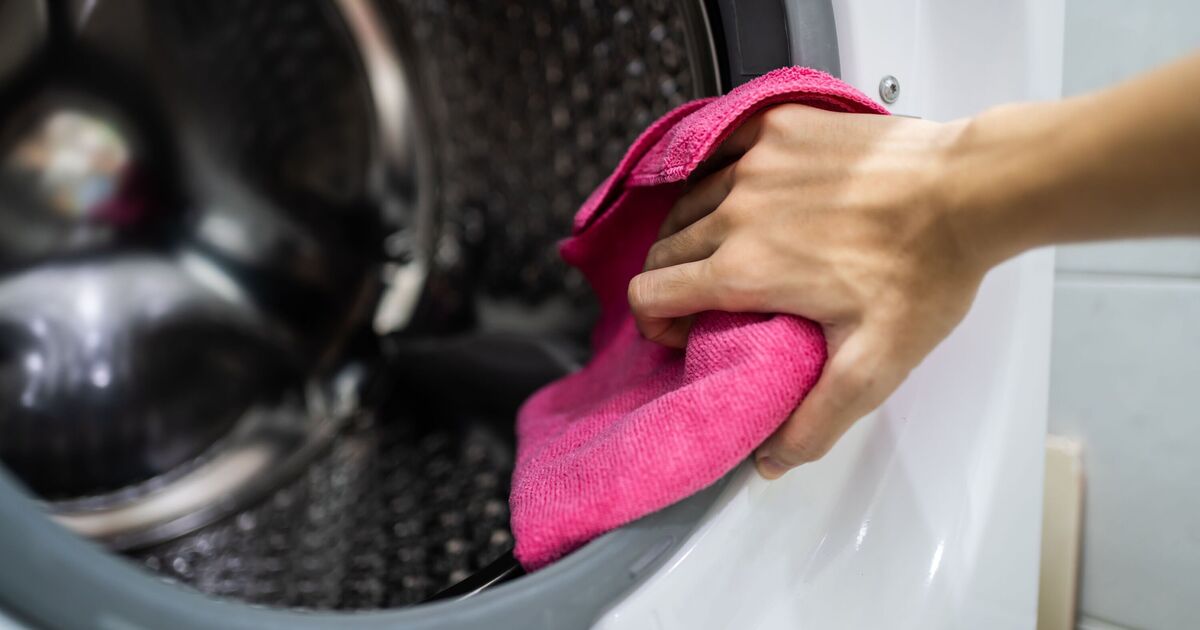
Start by combining a solution of water with white vinegar. Use a soft cloth or an old toothbrush to scrub the rubber seal around the washing machine door.
Make sure you reach all folds and crevices where mould can hide. Rinse thoroughly with clean water and dry with a cloth.
How to clean the detergent drawer
Remove the detergent drawer and soak it in a mixture of hot water and white vinegar.
Scrub away any visible mould with a brush, rinse, and dry before reinserting it into the machine.
Run a hot wash cycle
Once the rubber door seal and detergent drawer have been cleaned, set your washing machine to the hottest cycle (60 degrees or above) and run an empty wash.
Add a cup of white vinegar to the drum to kill any remaining mould spores and remove detergent residues.
