


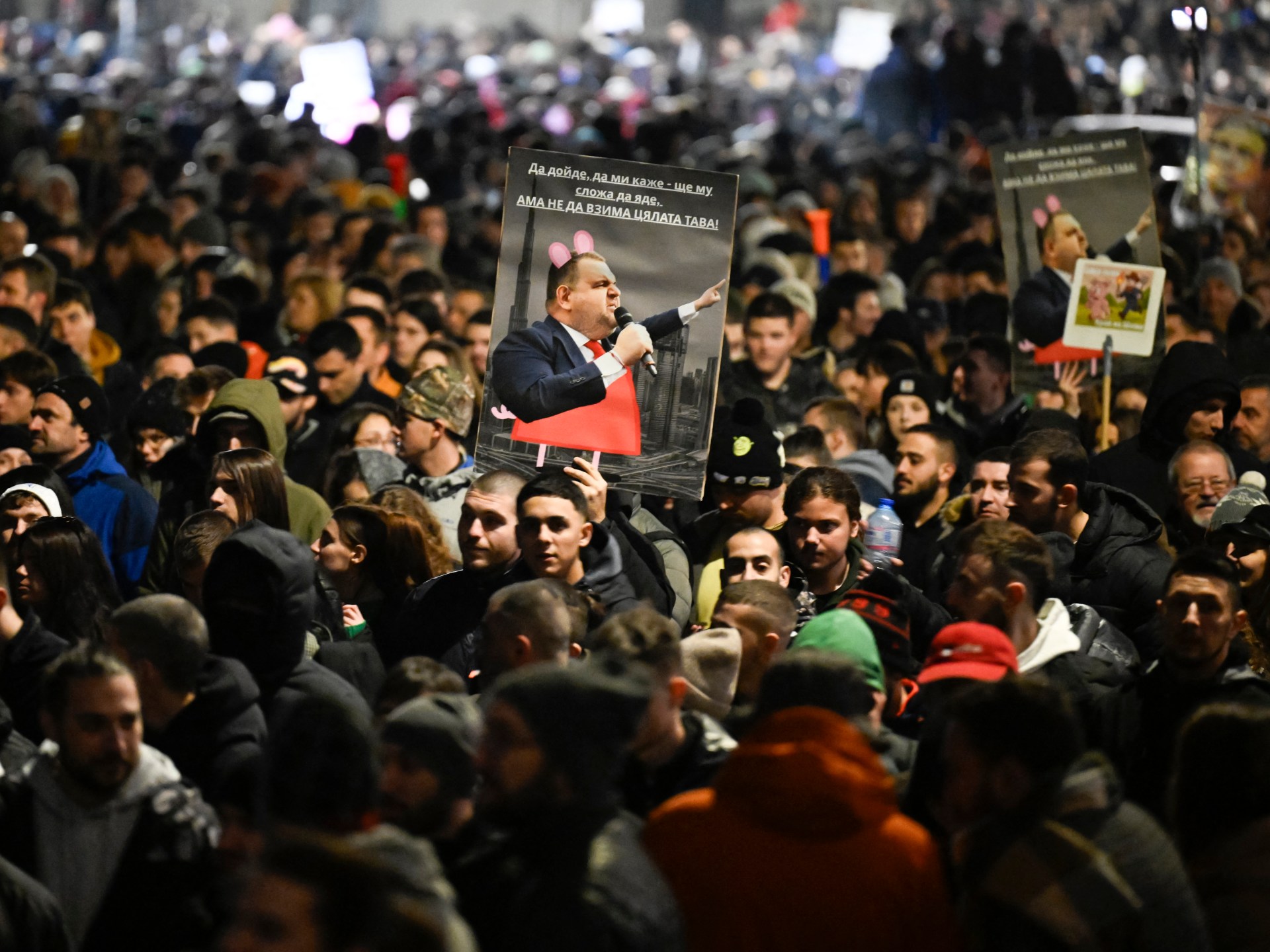
Protesters argue the draft budget would increase taxes and inflation with little payoff, while entrenching corruption.
Published On 2 Dec 2025
Bulgaria’s government has announced plans to drop a controversial budget proposal that triggered nationwide protests, the latest bout of unrest to hit the country as it moves towards adopting the euro.
The government’s information service reported on Tuesday that it had asked parliament to withdraw the 2026 budget – which had provoked public anger over planned tax increases and higher social security contributions.
Recommended Stories
list of 3 itemsend of list
The budget row adds to years of political instability in Bulgaria, which has gone through seven snap elections and a succession of short-lived governments since massive anti-corruption protests in 2020. The country is bitterly divided over entry to the eurozone and its broader geopolitical alignment between Russia and the European Union, of which it is a member state.
‘Not allow ourselves to be robbed’
Critics of the latest budget proposal, the first to be calculated in euros, argued that it would not only hurt the economy but funnel more money into state institutions they believe to be corrupt. Bulgaria is ranked as the most corrupt country in the EU, according to anti-corruption watchdog Transparency International.
“We are here to protest for our future. We want to be a European country, not one ruled by corruption and the mafia,” Ventsislava Vasileva, a 21-year-old student attending the protest, told Agence France-Presse news agency.
The government initially promised to retract and overhaul the budget proposal after protests last week, but later backed away, sparking another round of protests in major cities on Monday night. Organisers said that 50,000 people took part in youth-led protests in the capital, Sofia.
Chanting slogans like “we will not allow ourselves to be lied to; we will not allow ourselves to be robbed” and “resignation”, demonstrators demanded that the government revise the draft budget or step down. Slogans displayed in front of the parliament read “Generation Z is Coming” and “Young Bulgaria Without the Mafia”.
Organisers had urged demonstrators to keep the rallies peaceful, but violent clashes broke out between a small group of protesters and police. Demonstrators hurled rocks and firecrackers at police guarding the main ruling parties’ offices and damaged police cars, with officers in riot gear pepper-spraying protesters.
Several people were hospitalised with injuries, while police said they have detained 10 people.

Opponents of the abandoned budget argued that the plan to increase spending would have been shouldered by higher taxes on businesses and workers, as well as a sharp rise in public debt. They said this would have increased inflation without improving the efficiency of public services.
The government, however, claimed the plan was necessary to meet the eurozone’s requirement for a budget deficit under 3 percent of gross domestic product (GDP).
Around half of Bulgarians oppose adopting the euro, fearing that it will impinge on the sovereignty of the country and that retailers will exploit the changeover from the national currency, the lev, to the euro to raise prices.
The state-owned Bulgarian News Agency has reported that the cabinet will start the process of developing a new budget once parliament formally agrees to withdraw the previous bill.
