


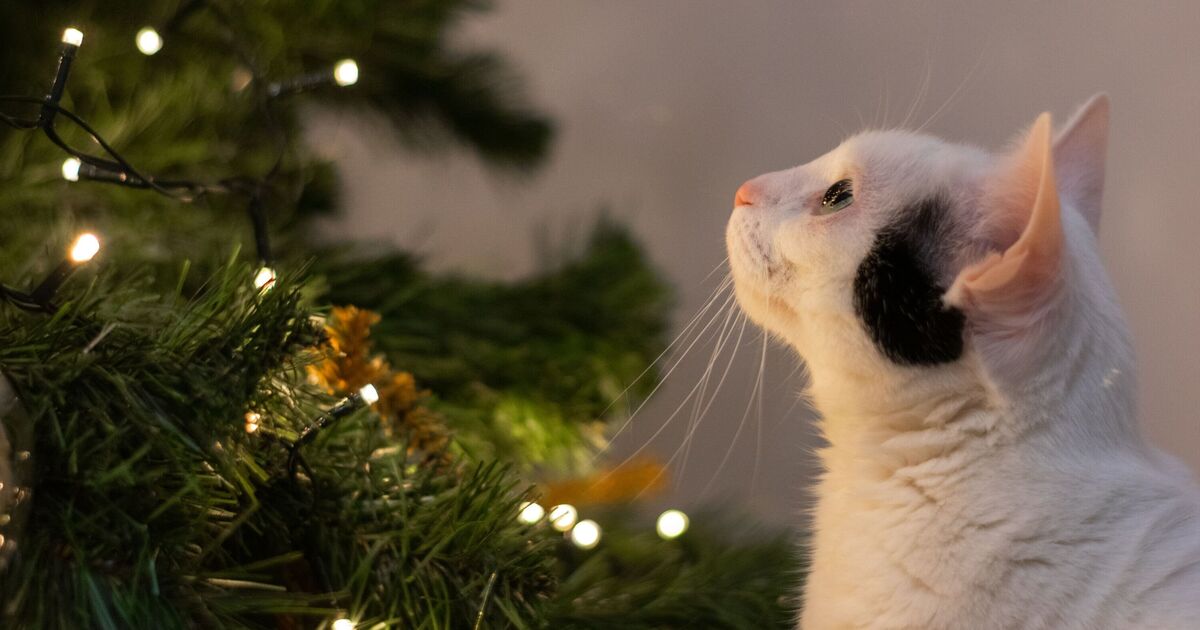
Christmas trees bring festive cheer into our homes, but they could pose risks to our beloved cats. Many of us will be decorating real and artificial Christmas trees this year, as we add baubles and lights.
But, cat owners have been warned of toxic elements any curious felines need to be careful of. Animal charity Blue Cross has shared key tips to help cats enjoy the Christmas season safely. They said: “Whether real or artificial, Christmas trees pose a hazard for your cat.
“They’re naturally curious about anything bright and sparkly, so your cat will probably want to climb the tree in the corner of the living room.”
Yet, the charity warned you must consider four important things if you are planning to bring a real Christmas tree into your home. They explained artificial trees are best, but if you want real then you should opt for a non-drop variety.
Oils produced by some real Christmas trees are mildly toxic to cats and can irritate their mouth and stomach. You also need to be careful when using fertilisers or plant food on your potted tree as many are toxic to cats and can leak into watering trays.
Be warned that Christmas trees in pots with soil might get used as litter trays and there is a small risk that sharp pine needles can cause damage to your cat’s tummy if swallowed.
When it comes to decorating your tree, you can also add in some cat-proof elements. Blue Cross recommend not using tinsel as they “look just like cat toys”.
They explained: “Your cat could swallow them, or even break glass ornaments, causing injury. Tinsel in particular can cause serious illness. If it’s eaten, it can cause a blockage in the stomach and intestines, and in some cases this can be fatal.”
Make sure decorations are secured to the tree as tightly as possible so a cheeky paw can’t tap them off. Christmas trees should also be placed in a heavy base to stop it from toppling over in case your cat decides they’re up for a climb.
Other ways to ensure a curious cat isn’t so bothered by the tree is to place decorations higher up the tree. Lights can pose a danger if your cat chews on the wiring, so make sure they’re turned off when you’re not around to supervise.
