


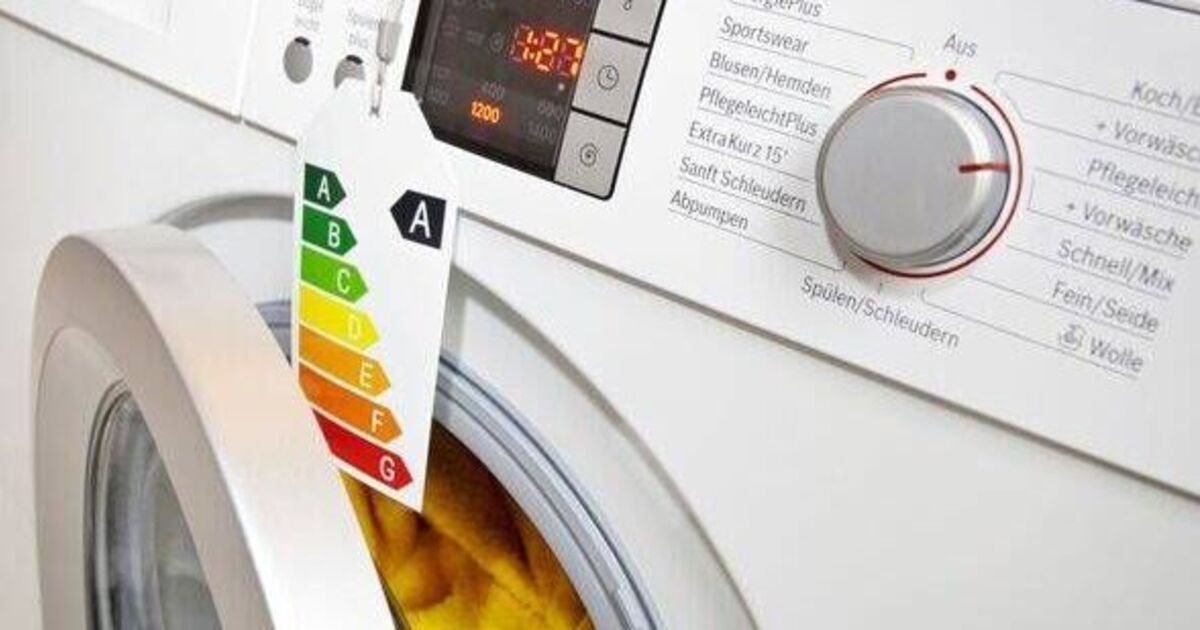
Households across Britain are grappling with soaring energy costs this winter, with countless families unable to afford adequate heating. However, one simple way to reduce your energy expenditure is to be more mindful of your laundry habits. Les Roberts from Bionic explained: “One way to cut down on costs when using a washing machine is to check the efficiency of your device. The energy rating should be printed on the energy label of your washing machine device and will be ranked from G to A, with A being the most efficient model.
“The more efficient models cut the kWh used per cycle significantly, so running costs will be much lower. Generally speaking, older machines tend to be less energy efficient, so it might be worth upgrading if you’ve had your washer for more than 10 years.” Whether running your machine at particular times saves money hinges on your electricity tariff. The expert noted this is particularly relevant for those on time-of-use or off-peak arrangements.
Electricity costs fall during periods of reduced demand when the National Grid experiences less pressure. Les highlighted that this usually occurs between 10pm and 8am.
He added: “Costs can sometimes be 50% lower during these hours, so it can definitely be worth doing your load overnight and taking advantage of these off-peak prices.”
Meanwhile, David Palmer, LG’s Senior Product Specialist for Home Appliances, offered additional money-saving advice for laundry: “Washing machines are more energy efficient when performing at lower temperatures for longer durations.”
He highlighted the impact of wash temperature on energy consumption, explaining: “The temperature you choose to wash your clothes at has an impact on your energy usage. If you choose to wash at 20°C or lower, you can minimise the amount of energy your washing machine consumes.”
Contemporary detergents are now formulated to perform effectively in colder water. Ariel, a prominent detergent brand in the UK, recommends washing at cooler temperatures, such as 20°C or 30°C, not only to help preserve colour but also to minimise shrinkage.
This method is particularly suitable for lightly soiled garments such as seasonal clothing that simply needs freshening up. However, for heavily stained garments, towels, or bedding, a higher temperature wash is advisable to eliminate bacteria and address mould typically above 40°C or even 60°C.
For garments with light soiling, Ariel recommends choosing a cooler wash. Palmer also pointed out a common mistake that can affect efficiency: “Overdosing with detergent can also affect your washing machine’s energy efficiency.”
He cautioned that using excessive detergent can result in more work for the appliance, inferior cleaning outcomes, and could even harm clothes, requiring replacements and undermining potential savings.
Deyan Dimitrov of Laundryheap has dispelled a prevalent “common misconception” indicating that extra-dirty clothes or bedding need more detergent. The laundry expert cautioned that this habit could be “more harm than good”, especially regarding bed linen.
He explained: “Not only can too much detergent stain your sheets (especially if they’re white), but it can also wear down their fibres, eventually causing holes and tears.”
Ditch the washing powder and opt for “half a cup of baking soda and vinegar to wash your bedsheets”.
David advocated a more “economic” strategy for laundry practices, which involves running full loads instead of several half-sized ones. Cramming too many garments into the machine could mean that they aren’t properly cleaned, and problems may occur with the detergent pod breaking down.
