


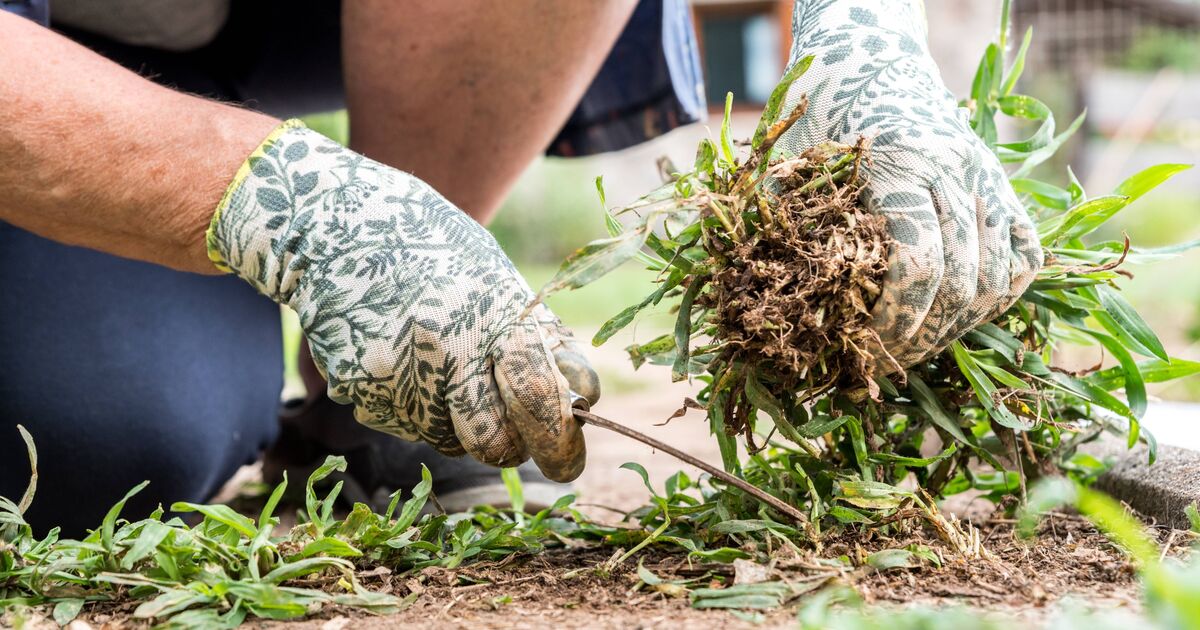

Gardening expert shares ‘cardboard’ method to keep weeds down (Image: HMVart via Getty Images)
Horticultural specialist and writer Ellen Mary has revealed her techniques for tackling weed growth in an exclusive interview with Express.co.uk. Ellen, who hosts The Plant Based Podcast, acknowledged that whilst we ought to coexist with weeds, there are occasions when removal becomes necessary, particularly when planting.
When cultivating crops, for instance, weeds can deprive plants of essential resources as they vie for sunlight, moisture and soil nutrients. Instead of resorting to chemicals or damaging sprays that can harm the wider ecosystem, Ellen advocates manual weeding. She stated: “For me, it’s all about hand-weeding, which is what I mainly do.
READ MORE: Timeless vintage baby names that are making a comeback this year
READ MORE: Overlooked European country has year round skiing and gorgeous architecture
“I don’t use anything on my garden or allotment at all. I don’t use any sprays, I just hand-weed.” Ellen also employs a method called “no-dig” gardening, which she maintains “really helps to keep the weeds down”. This approach involves applying a layer of mulch across the garden surface annually.
With February arriving soon, there are numerous gardening tasks you can begin. One specialist has now outlined nine essential jobs to start your month. Ellen noted this prevents sunlight from reaching weeds, thereby inhibiting their development.
She added: “Any seeds that are blown in the wind that land on top of the mulch can just be hand-weeded out.
“If you have a lot of weeds that you do need to clear because you want to grow something, I’d recommend laying cardboard and a really thick layer of well-rotted organic matter on top. Then, just plant through that. Each year, add another smaller layer of mulch. That’s the basics of no-dig gardening but it really helps to keep the weeds down.”
Many weeds are highly nutritious and can be used for their health benefits.
However, Ellen explained that many gardeners label a plant as a weed because it’s “invasive or annoying” or it doesn’t look attractive. A weed is simply a plant that’s growing in an unwanted place.

Cardboard works to keep weeds at bay (Image: Lucy Lambriex via Getty Images)
The gardening author suggested that gardeners need a “change of mindset” when it comes to weeds. She continued: “It doesn’t matter what we’ve been told to call them.
“A nettle is a plant, chickweed is a plant – all of these different ‘weeds’ are just plants. Many of them are highly nutritious and good for you as well. I think we just need to re-think our classification of weeds in that sense.”
Nettles, for instance, are favoured by ladybirds, which eat aphids. Nettles can also be utilised to brew tea and create plant feed. “Everything has a use,” Ellen concluded.
Dandelions, often dismissed as a “classic weed”, are in fact one of the earliest sources of nectar for bees. By leaving dandelions undisturbed, we can ensure that pollinators have access to them.
Moreover, dandelions can be utilised to brew tea and coffee. Ellen emphasised that gardens don’t need to be immaculate. She advocated for the benefits of maintaining wilder areas within the garden. She encouraged gardeners not to overly “sweat weeds”.
