


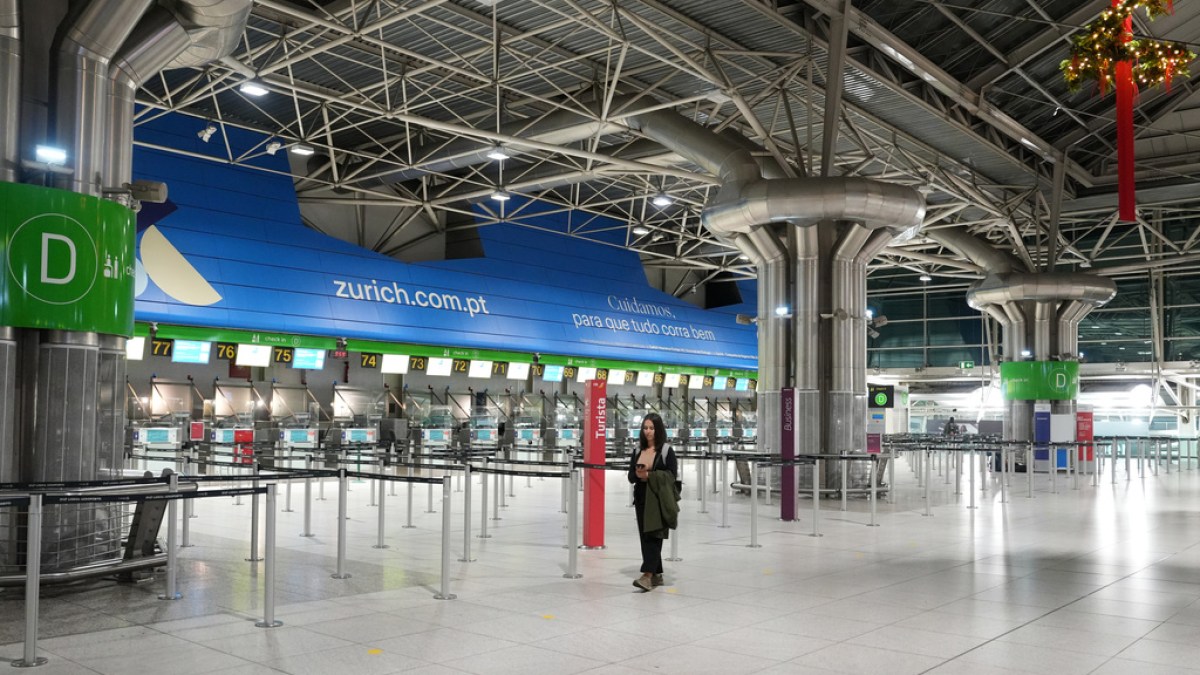
The walkout is the nation’s largest since June 2013 amid protest action against a bill to simplify the firing process of workers.
Published On 11 Dec 2025
Widespread disruption has hit Portuguese air travel and trains, hospitals and schools after trade unions called the biggest nationwide strike action in more than a decade against government labour reforms.
Heavy disruption on Thursday has been felt across public sectors as workers protest against a draft law aiming to simplify firing procedures, extend the length of fixed-term contracts and expand the minimum services required during industrial disputes.
Recommended Stories
list of 4 itemsend of list
Some public transport operated due to minimum service requirements imposed by authorities, but the capital, Lisbon’s, streets were noticeably quieter.
Lisbon’s main train station was empty with most services cancelled and the TAP Air Portugal national airline called off about two-thirds of its usual 250 flights.
While hospitals stayed open, most surgeries and appointments have been postponed as nursing staff walked out.
Thursday’s walkout is Portugal’s largest since June 2013, when the country was forced to gut public spending in exchange for international aid after being engulfed by a debt crisis that affected several European nations.
Prime Minister Luis Montenegro has insisted that the labour reforms, with more than 100 measures, were intended to “stimulate economic growth and pay better salaries”.
But the communist-leaning General Confederation of the Portuguese Worker (CGTP) and more moderate General Union of Workers (UGT) have lambasted the plans.
The CGTP organised about 20 demonstrations across the country. Its secretary-general, Tiago Oliveira, called the reforms “among the biggest attacks on the world of work”.
He told the AFP news agency that the government action would “normalise job insecurity”, “deregulate working hours” and “make dismissals easier”.
Of a working population of some five million people, about 1.3 million are already in insecure positions, Oliveira said.
‘Already a success’
With Portugal set to elect a new president in early 2026, Oliveira said he considered the strike was “already a success” as it had drawn public attention to the government’s labour reforms.
“Without a doubt, we’ll have a great general strike,” the union leader added.
Public opinion is largely behind the action, with 61 percent of those polled in favour of the walkout, according to a survey published in the Portuguese press.
On the eve of the strike, Montenegro said he hoped “that the country will function as normally as possible … because the rights of some must not infringe on the rights of others”.
Although his party lacks a majority in parliament, Montenegro’s government should be able to force the bill through with the support of the liberals, and the far right, which has become the second-largest political force in Portugal.
The left-wing opposition has accused Montenegro’s camp of not telling voters that workers’ rights rollbacks were on the cards while campaigning for the last parliamentary elections.
Although Portugal has recorded economic growth of about 2 percent and a historically low unemployment rate of some 6 percent, the prime minister has argued that the country should take advantage of the favourable climate to push through reforms.
