


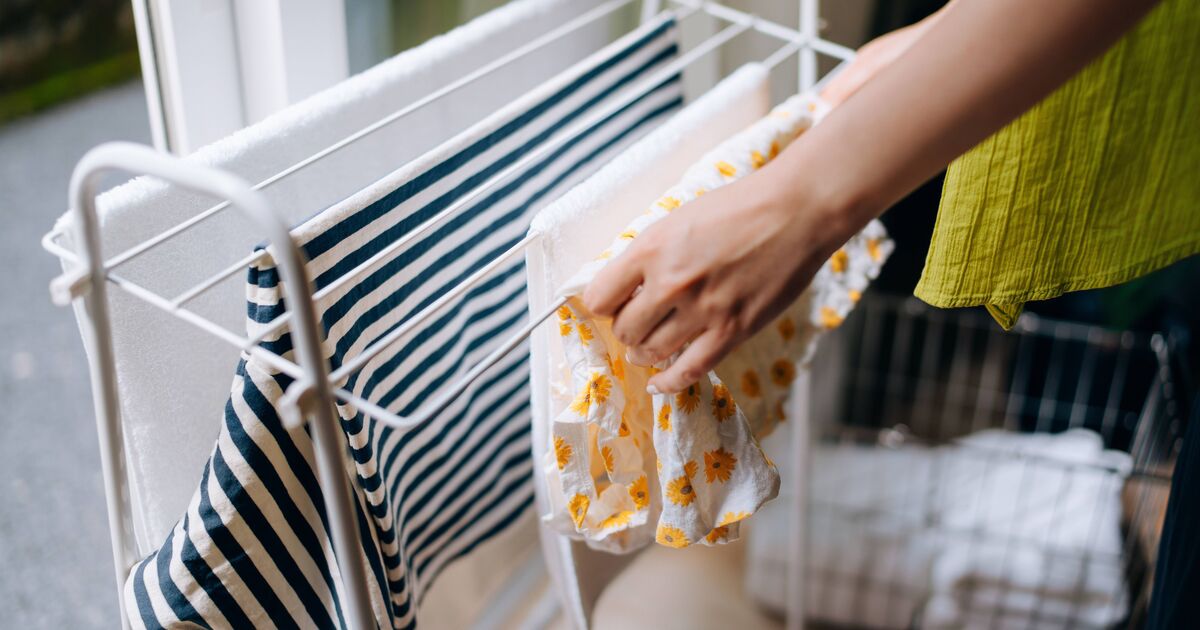
If you don’t have a tumble dryer at home, you’ll understand just how challenging laundry day can become. As temperatures drop, drying your clothes seems to take forever, particularly if you haven’t switched the heating on yet.
Getting clothes dry quickly benefits everyone, as damp washing can lead to issues such as dampness and mould without adequate ventilation. Fortunately, there’s a simple step you can take before hanging your garments that can accelerate the process. Laundry specialists at Lenor have shared advice to help you perfect the technique of indoor clothes drying, even without a dryer, explaining: “The cold, damp winter months can make drying clothes in winter a challenge, particularly when you don’t have a tumble dryer.
“In summer drying clothes is much easier as your homes and garden are naturally warmer so clothes can air dry quickly. But drying clothes indoors in the winter can take up a lot of room and a lot of time.”
Unfortunately, laundry remains a necessary chore throughout the year. However, one recommendation will ensure your garments smell ‘as good and fresh as new’ without that unpleasant musty scent, reports the Express.
The specialists suggest simply giving your clothes a brisk shake when removing them from the washing machine. Combined with an extra spin cycle, this proves an excellent method for speeding up drying time.
The experts said: “Give laundry a good spin and an extra shake when removing it from the washing machine to extract surplus water and damp.
“Make sure you check your laundry’s care labels before you spin them, as some clothes will be too delicate.”
Another important tip when drying clothes indoors is ensuring you hang them up straight after washing. Allowing them to remain in the machine or laundry basket is a guaranteed way to make them smell musty, and if space is limited, your curtain rail can serve as additional hanging space.
When using a clothes airer, attempt to place this close to an open window or somewhere with sufficient airflow. Ensure the garments are properly spaced out, not piled on top of one another, and take time to turn them every few hours to help them dry more quickly.
