


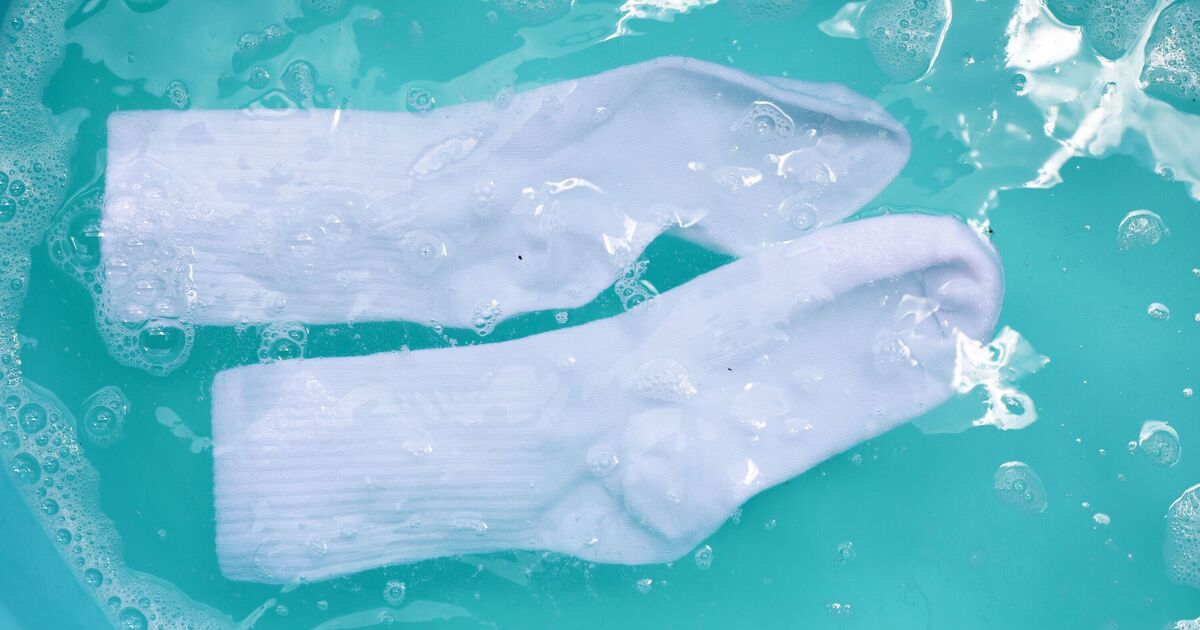
Maintaining the pristine condition of white sock bottoms can prove tremendously difficult, as stains seem to appear regardless of how often you wash them. Baris Atmaca, a specialist from Socks Kick, claimed that the optimal method for washing socks to ensure “they’re as clean as possible” involves using lemon juice.
He explained: “Vitamin C in citrus fruits makes them natural antioxidants. The bleaching characteristics of lime and lemon make them popular household cleaners as well as laundry detergents. Soaking socks in lemon juice before washing them clean is a common cleaning technique.” Whilst bleach may be the first thing you think to use on stained white socks, it can ruin the material and cause them to deteriorate or develop a yellowish tinge.
On the other hand, lemon juice remains gentle on fabric whilst proving remarkably successful at dissolving stains because of its acidic qualities.
Beyond removing stubborn marks, lemon juice is cheap, non-toxic and will additionally assist in brightening the material so your socks appear completely fresh in moments.
To use lemon juice to eliminate brown sock stains, start by reversing the socks inside out and place them in a bowl or bath containing warm water. Then add three tablespoons of lemon juice per litre of warm water.
Allow the socks to steep for a minimum of 15 minutes, though you can leave them for an hour or two or even overnight for especially persistent stains.
After, transfer the socks to the washing machine and run them through a standard wash cycle. Once the socks have been washed, they can be left to dry on an airer with a dehumidifier or placed in the tumble dryer.
Once your socks have completely dried, they should appear brilliant, pristine white and entirely free from blemishes.
If the stains are still visible, soak them in the lemon juice solution for an extended period, or experiment with citric acid – a crystallised and more potent form of lemon juice available in the cleaning section of most supermarkets.
Baris explained: “You may use citric acid instead of juice. The unclean regions will be attacked more aggressively and effectively if the solution has a greater acid content.”
