


Salmon is something I tend to cook two to three times a week, so I’m always looking for new ways to flavour this oily fish. I’ve previously tried out Mary Berry’s baked parmesan salmon recipe, but my go-to method always seems to be to coat the fish in paprika salt and garlic granules and cook it in the air fryer.
The chefs at Mui Kitchen claim that salmon will taste better if you add one ingredient that “brings a lot to the table”. They said: “Salmon is delicious grilled, pan-seared, air-fried or baked with a bit of olive oil and just seasoned with salt and pepper. But there’s a secret ingredient that will make your salmon taste even better.” The cooking pros listed miso as the ingredient in the glaze recipe that will “make your salmon taste like it came from a fancy restaurant” to create an “magic dinner” at home.
I had heard of miso before, but it was never an ingredient I had ever cooked with. Since using miso on salmon, I’m obsessed with the stuff.
It’s essentially a Japanese fermented soybean paste that is salty, earthy and has a rich savoury taste.
While this recipe called for miso, I was a little unsure about which type to buy in the supermarket, as they had white and red miso.
Both types of miso will work with salmon, although white miso is often recommended for salmon recipes.
White miso isn’t fermented for as long as red miso, so it has a milder flavour.
I only cooked two salmon fillets this time around, but the ingredients for the glaze should be enough for three to four pieces.
Ingredients for the salmon glaze
Two tablespoons of white misoOne tablespoon of soy sauceTwo tablespoons of vegetable oilOne tablespoon of sugar
Method
I started by combining all of the ingredients listed above, and then coated the salmon all over with this mixture. I left the fish marinating for 30 minutes in the fridge, but you can leave it for up to two days if you want a stronger flavour.
After, I popped the salmon on a lined baking tray in a pre-heated oven for about 15 minutes at 180 degrees.
It’s important not to use a high heat when cooking salmon, as a lower heat allows the fat to render more slowly out of the fish, keeping it juicy and flavorful.
Plus, a low, slow oven reduces the amount of odour compounds released during cooking, which means no fishy-smelling kitchen.
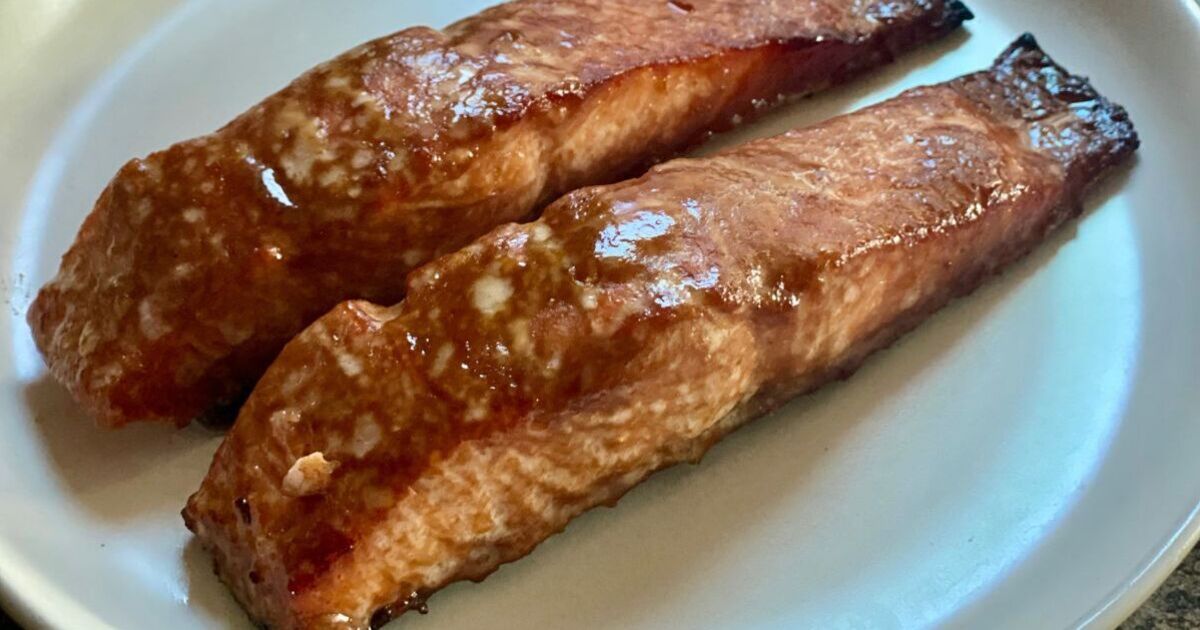
The salmon had a sweet and savoury caramelised flavour and kept the fish tender and moist.
