


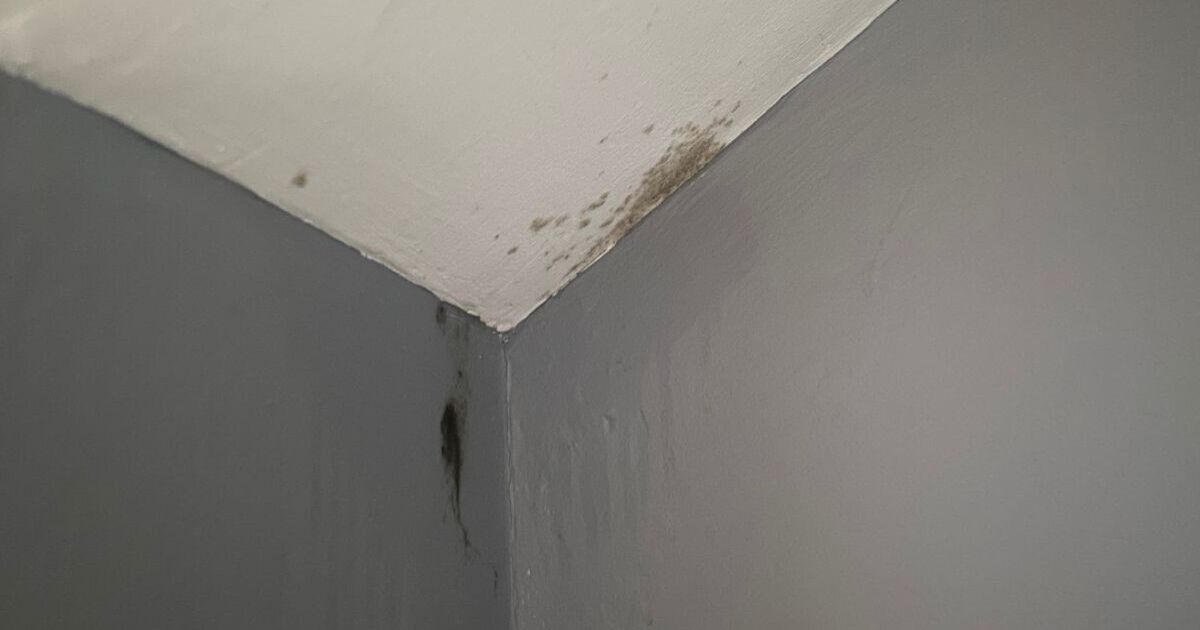
On many of the external-facing walls of my home, mould and damp are often a problem, particularly during winter. The mould typically appears as small black spots that will spread if not dealt with immediately. While I typically use a bleach-based product to remove mould, this time around I opted for a natural approach, which worked so well.
The natural cleaning product I decided to go with this time around was white vinegar. Unlike many commercial mould and damp removers, vinegar is non-toxic, and its mild acidity kills 82% of mould species, making it a practical solution for the job. In fact, it’s more effective than bleach, which only kills surface mould and can actually make matters worse.
Any type of white vinegar can be used for this cleaning tip. I just used one that’s recommended for cleaning, as that’s what I had to hand.
White vinegar is most commonly found with 5% acidity and works best undiluted, so I didn’t need to worry about mixing it with water first.
With the bottle of vinegar at the ready, I sprayed the mould directly, fully saturating it with the vinegar, and allowed the acidic liquid to sit for five minutes.
Don’t be tempted to scrub or rinse at this time, as the mould needs time to completely absorb the vinegar.
During this time, I could see the mould start to disappear right before my eyes without any scrubbing.
Once the five minutes were up, I went in with a damp microfiber cloth and gave the area a good scrub to remove the last remaining mould patches.
After scrubbing and rinsing the area clean, I gave the area one last spray of vinegar and left it to air dry.
This last shot helps to eradicate any lingering mould and prevent it from growing back so quickly.
Don’t worry about the strong vinegar odour. I hate the smell, but it does fade on its own. I opened my windows, and the smell was fully gone in 20 minutes.
Since removing the mould, every two weeks, I like to use vinegar to clean the area to stop the mould coming back for good.
