


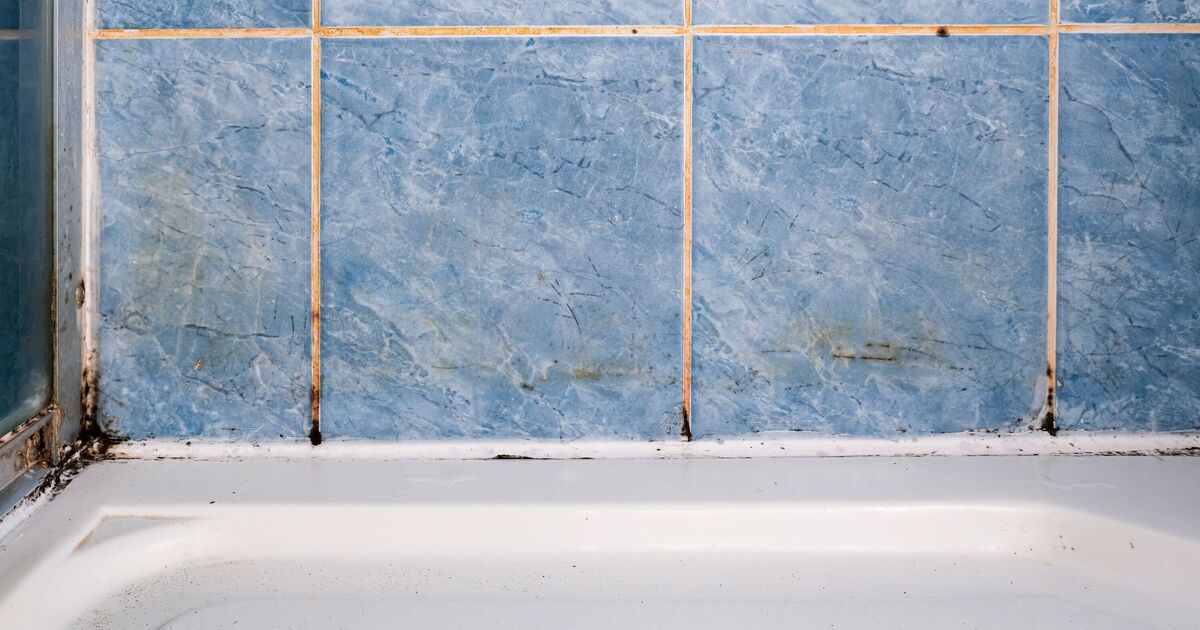

There’s an expert-approved way to banish shower grout mould for good (Image: Getty)
We all know the struggle of trying to keep the bathroom clean. It’s one of the most-used rooms in the house so it’s no wonder it needs a lot of work, especially around the bath and shower area.
Being such a damp and warm environment, it’s the perfect breeding ground for mould to grow and thrive. When lodged in the grout in between tiles, it can make your entire bathroom look dirty and unhygienic. So, fed up of trying to scrub my bathroom tiles to no avail, I decided to seek the help of some experts who could tell me exactly what I need to be doing.
Read more: Household item poses massive mould risk and everyone has it in their homes
Read more: Toilets stay germ-free if you pour 1 item better than bleach down the bowl
Surprisingly, white vinegar was not the most popular answer. Instead, many of the experts recommended using another very versatile cleaning product – hydrogen peroxide.
This natural bleaching agent is perfectly safe to use at low concentrations, and it helps to break down the cellular structure of mould on hard surfaces like tiles.
Alex Morrissey, founder of Best Roofers and expert in property maintenance, explained: “A dependable bleach and vinegar-free method is 3% hydrogen peroxide on the grout, left to dwell for 10 to 15 minutes before scrubbing with a stiff nylon brush and rinsing.
“For stubborn staining, make a paste of bicarbonate of soda with 3% hydrogen peroxide, work it into the lines, leave it for 10 minutes, then scrub and rinse. Repeat as needed until the grey or black hue lifts.”

Hydrogen peroxide is a hugely effective tool for removing mould (Image: Getty)
Nigel Bearman, home cleaning expert at Daily Poppins, hailed hydrogen peroxide as ‘the most effective’ mould cleaning alternative for bleach. He warned: “Bleach can whiten the surface, but it doesn’t always penetrate porous grout, so the mould often comes back just as quickly.”
Raving about 3% hydrogen peroxide, which you can buy over the counter, he said: “It works well because it penetrates the grout rather than just sitting on top.”
Before you start cleaning, however, it’s important that you prep the area first. Alex says this involves cleaning off any remaining water, soap or other debris, in order to get the best mould-free shine.
He said: “Results are usually better when the soap film is stripped off first, because oxidisers can reach the mould rather than sitting on residue. Degrease with a mild bathroom cleaner or a few drops of washing-up liquid in warm water and rinse.”
Similarly, oxygen bleach powder – which is sometimes sold as a laundry booster – can also be used as an effective mould removal tool.
Lee Keat, founder of Vapor Clean LTD, explained: “When mixed into a paste and worked into the grout lines, it breaks down organic staining without the aggressive fumes many people hate with bleach. Leave it on for around 15 minutes, scrub, then rinse well.”

Having adequate ventilation in the bathroom will help to stop mould from forming (Image: Getty)
And, if you want to prevent mould from ever forming in the first place, there are two key things you need to do.
Brian Toward, bathroom expert and CEO of Wholesale Domestic, said: “Ventilation is important to tackle mould problems, so always use an extractor fan or open a window during after showers to reduce the humidity in the room. Also wipe down tiles, grout and sealant with a dry cloth to remove excess moisture after bathing or showering.”
