


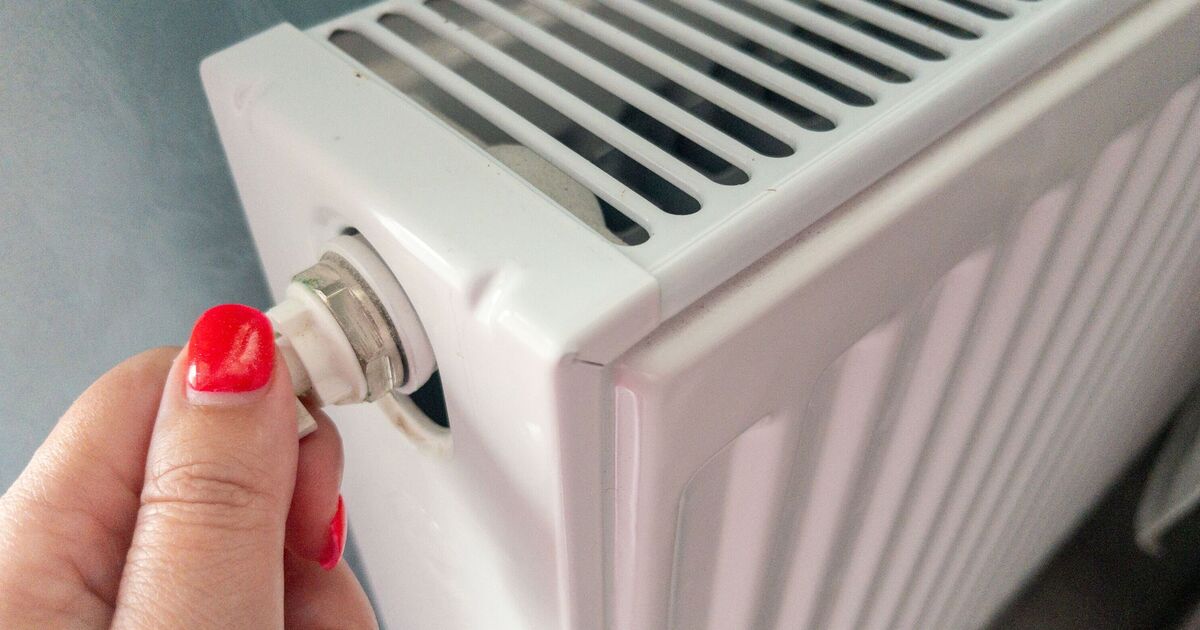
If you hear banging, clunking, clicking and thudding nosies coming from your radiator, it’s likely down to all that trapped air disrupting the water pressure – and you might need to bleed your radiators.
Bleeding radiators only applies to water-filled central heating ones, which are the kind that are plumbed into your boiler system.
However, it doesn’t apply to electric radiators or towel rails and oil-filled plug-in radiators, which are sealed and should not be bled. If your radiator has a small bleed valve at the top corner, you’re safe to proceed.
I thought bleeding my radiators would be a tricky job, but luckily, it didn’t take much time or effort.
How to bleed a radiator
The first thing I did was turn the heating off and let the radiators cool down. This is important because it stops hot water from spurting out of the valve and makes it much easier to hear the hiss of air escaping.
Once everything had cooled, I grabbed my 97p radiator key, which I bought from Screwfix, an old towel, and a little tub to catch any drips.
I started with the radiator furthest away from the boiler and worked my way back towards it. Beginning with the furthest radiator is apparently a good rule of thumb because it helps push air out of the system more effectively.
On each radiator, I looked at the top corners until I found the bleed valve – a small metal fitting with a square pin inside.
I placed the radiator key over that pin and held the towel and tub underneath to protect the floor. Then I turned the key very gently anticlockwise, just a tiny amount.
As soon as I cracked the valve open, I heard a clear hissing sound which was the trapped air escaping.
I kept the valve open until the sound changed. After a few seconds, the hissing stopped and a steady stream of water started to trickle out. That’s the sign that the air has gone and only water is coming through. At that point I turned the key clockwise to close the valve again.
I repeated the same process on every radiator that had been noisy or cold at the top. Once I’d finished going round the house, I checked the boiler pressure gauge.
On a combi boiler or sealed system, bleeding radiators can sometimes lower the pressure a little, so it’s worth making sure the needle is still in the recommended range.
After turning the heating back on, I noticed that the difference was immediate. The radiators heated up evenly from top to bottom, and the banging and clunking were massively reduced.
