


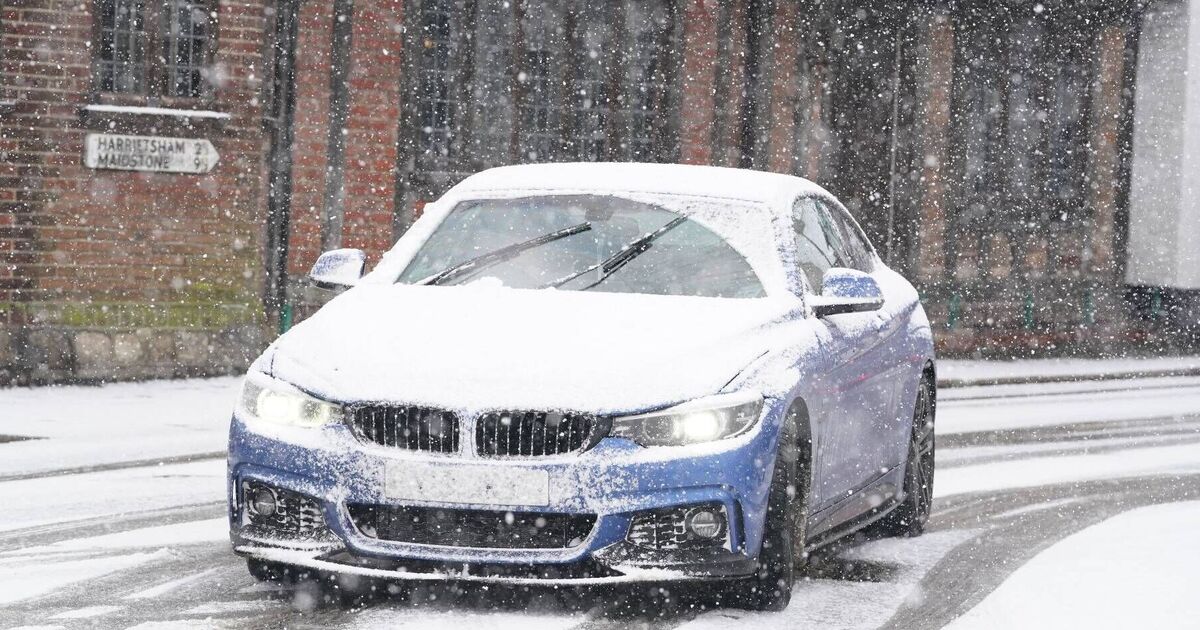
With snow and ice warnings in place across various parts of the UK, drivers are being cautioned about common winter mistakes that could result in hefty fines and serious safety risks.
As Britain faces freezing conditions, Bryn Brooker, Head of Road Safety at Nextbase, warns: “Every year, bad weather contributes to thousands of incidents on the UK’s roads. These are some ways you can stay safe as the cold snap continues.”
The road safety expert has offered crucial advice to help motorists avoid potential hazards and Highway Code penalties this winter as temperatures drop, snow falls, and adverse weather becomes the norm.
Clear all windows
Bryn advises: “Before embarking on your journey, take the time to remove all snow and ice from your vehicle’s windows. This includes the windshield, side windows, and rear window. A clear line of sight is crucial for safely navigating wintry conditions and will keep you from a £2,500 fine and three penalty points on your licence for ‘using a vehicle in a dangerous condition’.”
Clear snow from your car’s roof
The safety expert advises: “As you clear your vehicle, don’t forget about the top! Remove all accumulated snow from the roof to prevent it from falling off onto the road, creating hazards for other drivers. Driving with snow on your car is not explicitly illegal, but if the police catch you driving with snow on your vehicle, you could face a £60 fine and three penalty points. This penalty is in accordance with section 229 of the Highway Code, which sets guidelines for driving in adverse weather conditions.”
Increase following distance in bad weather
Bryn suggests increasing your following distance in poor weather: “When the weather is wet, double your following distance from at least two seconds to at least four seconds,” he warns. “Watch as the driver ahead of you passes a landmark like a pole or a bridge, then count how many seconds it takes you to reach the same point. Four seconds should mean if the car ahead of you stops ahead of you in a hurry, you have space to stop too.”
Reduce speed dramatically in icy conditions
The road safety specialist also provides advice for icy conditions: “In icy or snowy conditions, it will be harder to stop, so extend your following distance even more and drive a lot slower. In fact, you should do everything more slowly, as suddenly braking or turning can cause you to lose traction and skid. If you have to break, do it slowly.”
He further advised: “In a manual car, start in second gear instead of first, as this will give you more control. In an emergency, check your car’s manual to see if it has a recommended winter driving gear.”
Keep a winter driving kit handy for emergencies
Bryn also emphasised the importance of preparing a winter driving kit for emergencies. He said: “Breakdowns happen. No matter how well serviced your car is or how good your driving is, there’s always a chance you could be stuck somewhere cold waiting for help. Keep warm clothes in your car, including waterproof and sturdy footwear, a high-visibility jacket, a shovel, and, of course, jump leads. An old rug could also be useful to help your front wheels get traction on ice,”.
He added: “An ice scraper will also be useful to get ice off your windscreen, and a power bank will make sure you always have some mobile phone battery to call for help if needed.”
Get a dash cam
Bryn also suggested considering a dash cam for protection against false claims in case of accidents, reports the Mirror.
He said: “In case you are in an accident through no fault of your own, a Nextbase dash cam is your best tool to protect yourself from spurious claims. It is the only dash cam brand tested in UK-weather conditions in Wales, meaning it can accurately record what is going on even in very poor weather.”
