


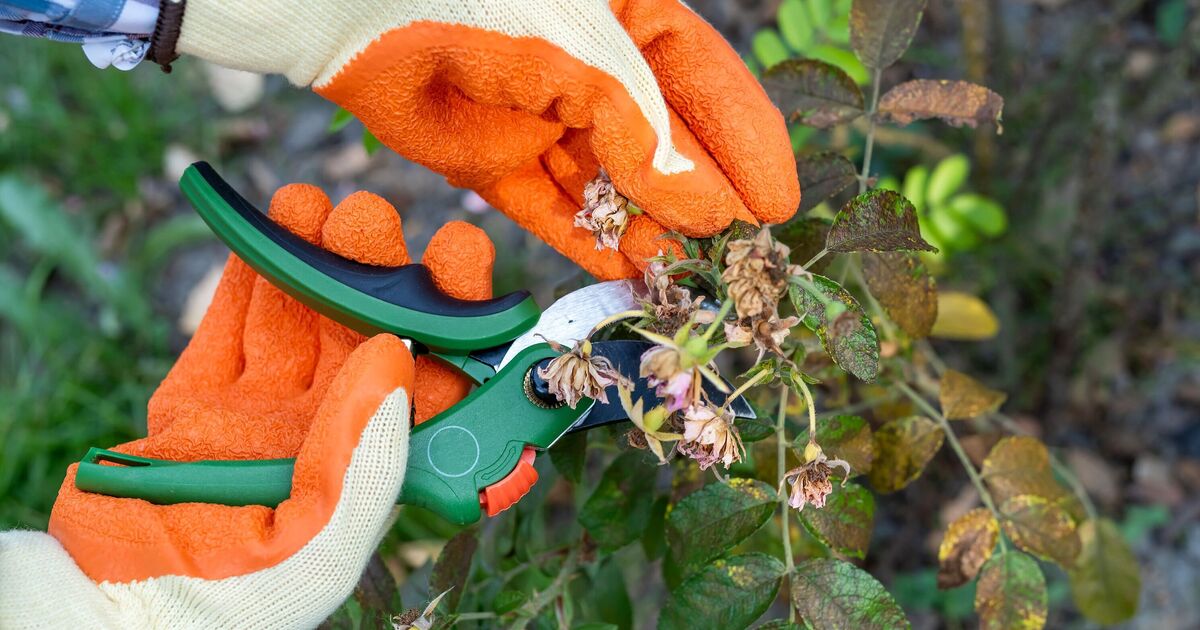
While the majority of the garden lies dormant, January is the perfect opportunity to perform a few crucial gardening tasks, including pruning. It’s a chance to prepare for the upcoming spring, despite it still being a few months away.
Craig Wilson, co-founder and gardening expert at Gardeners Dream, said: “From the cascading beauty of wisteria to the classic elegance of roses, each plant requires a unique touch. Here are my top tips on pruning a selection of popular garden staples. This ensures they not only survive but thrive in the coming seasons.”
Roses
Roses are one of the most popular garden plants to prune in January, as trimming them can stimulate new growth.
The expert advised cutting back any dead, damaged, or diseased wood in late winter or early spring, especially on shrub roses.
Gardeners should also prune back the remaining branches to an outward-facing bud shape to promote outward growth.
Craig added: “Follow this by opening up the centre of the bush by removing any inward-growing branches.
“This will help to improve air circulation and light penetration, reducing the risk of disease and encouraging healthy blooms.”
Clematis
Group two clematis, which flowers on both new and old wood, can be pruned during January, February or March.
Make sure you remove dead or weak stems, while also cutting back the remaining stems to a strong pair of buds to encourage new growth in the spring.
The expert said: “When dealing with group three clematis, these are the ones that bloom in late summer on new growth and can be pruned back hard each year.
“You should prune them back hard in late winter. This means cutting back all the previous year’s stems to a pair of strong buds about 15cm to 30cm above ground level, which will promote a flush of new growth and a profusion of blooms.”
Wisteria
According to the gardening expert, regular pruning of this plant ensures more “prolific blooming” throughout the flowering season.
He noted: “In mid-winter, cut back the side shoots, shortened in the previous summer, to two or three buds from the base to enhance the plant structure and focus energy on the formation of spring flowers.
“You’ll then want to remove any unwanted or excessive growth, especially around windows and gutters, to maintain the shape and control the size of the plant.”
