


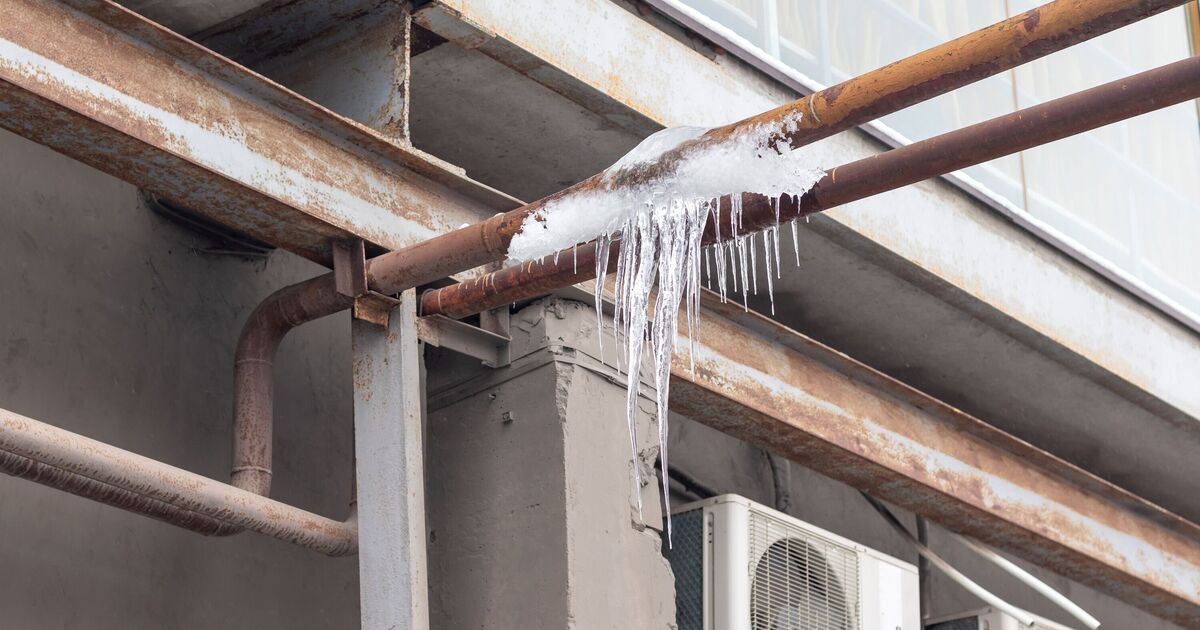
Cold weather can cause chaos in your home as when the temperatures drop, the chances of having frozen pipes skyrocket. The UK has already seen temperatures drop below zero this winter, and more bitter weather is sure to be on its way.
Frozen pipes in homes can be a costly issue and is caused by the cold weather. They can prevent heating and hot water from working properly to the worst outcome of having a burst pipe. Your home can suffer a leak or even flooding if this happens.
So, it is vital to protect exposed pipes in your home to ensure this doesn’t happen to you. Freeze-proofing your home can be simple to do and will certainly prove cost effective if the worst was to happen.
Thankfully, one of the best ways to prevent your pipes from freezing can be done through a DIY trick. British Gas explained: “Insulating your pipes and water tanks is one of the best ways to prevent them from freezing.
“You can buy inexpensive pipe lagging and tank jackets from most DIY stores and fit them yourself for free. Just make sure you check the pipe and tank measurements first.”
They have suggested to focus on three key areas. This includes outside pipework, such as heating drainpipes and overflow pipes. British Gas urged: “As well as straight lengths of pipe, remember to cover bends, valves and fittings too. And don’t forget your outside taps. You should find insulated tap covers at your local DIY store.”
They also recommend insulating pipes in colder areas of the home, such as unused loft spaces, garages and basements. Water tanks are often forgotten but are actually one of the main problem areas during the winter.
They are even the leading cause of a burst pipe, so be sure to insulate tanks that are situated in colder areas like basements, garages and lofts.
Water in pipes can freeze when temperatures outside drop below zero. They can expand, leading to cracked or burst pipes. If it bursts, all the contained water would spill into the home.
Insulating pipes in unheated rooms or areas with exposed pipes can be beneficial to help stop this from happening. Insulation sleeves or foam pipes, commonly known as pipe lagging, can be used for this.
It is also recommended that you maintain an ‘ideal temperature’ in your home between 18°C and 20°C throughout the winter. The minimum temperature needs to be at least 10°C to prevent frozen pipes as this allows the boiler to operate efficiently.
