


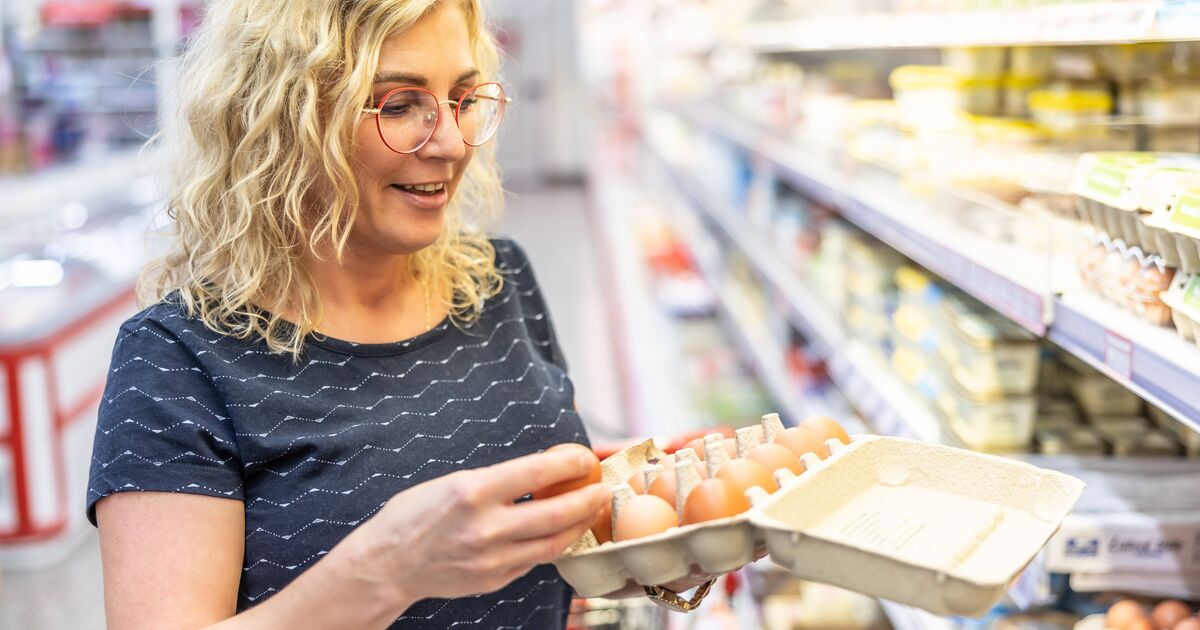
Making a small adjustment to your weekly supermarket shop could result in substantial savings. When you overspend on essential items like bread, eggs, and milk, the expense can rapidly mount up.
Fortunately, there’s a ‘really useful’ code that customers can spot when purchasing eggs, enabling them to find free-range eggs at the most competitive price, reports the Mirror. ITV This Morning’s consumer expert Grace Forell shared how shoppers can save on eggs when shopping at UK supermarkets on the show.
Known as ‘The Sustainable Spender,’ Grace is a multi-award-winning consumer journalist and presenter, known for her TV appearances. Grace explained that all eggs sold in UK supermarkets will have a code printed on the shell, which refers to the farming method used.
The code is often printed in pink, and there are several possible numbers. If the code has a ‘0’, this indicates it is organic; a ‘1’ means it is free-range; ‘2’ means it is from barn hens, and ‘3’ refers to caged hens.
“This is really useful as prices can vary a lot between free-range eggs and it’s easy to be drawn in by rustic-sounding farm names, but you can get cheap eggs which are free-range too and save yourself money without compromising your ethics on animal welfare.”
Grace said that when she checked a supermarket’s website, the prices for free-range eggs varied between 27p and 58p per egg, so “you can actually save a lot of money” knowing what to look for.
It’s also possible to check the country of origin by looking at the final numbers, which correspond to the farm ID number. For instance, ‘0UK12345’ would refer to organic eggs produced in the UK, according to the expert.
Money-savvy customers can also save on their weekly shop by timing their trips to coincide with the hours shops are more likely to be selling reduced-price items. Save the Student says: “For the best bargains, you should try to go shopping later in the day. It’s best to go an hour or so before closing time, or at about 7pm in 24-hour stores.
“All the items that go out of date the following day will be heavily reduced. The shop just wants to get rid of them before they have to be thrown away, so look out for the yellow ‘reduced’ stickers.”
It’s not just food approaching the best-before date that shoppers can save on. Save the Student adds: “You’ll likely be able to find a range of things there, such as products with damaged packaging or other minor faults. Whatever the issue, if you see the yellow sticker, there’s a bargain waiting to be snapped up.
“This corner of the supermarket is usually best stocked towards the end of the day (when the ‘best-before date’ food migrates over). However, there will almost always be something on the shelves, no matter when you shop. Yellow stickers galore.”
