


TAIPEI, Taiwan (AP) — Taiwan’s premier on Friday hailed a new trade deal with the United States as the “best tariff deal” enjoyed by countries with trade surpluses with Washington, as meanwhile a Chinese official in Beijing condemned the accord.
The agreement cuts U.S. tariffs on Taiwanese goods to 15% in exchange for $250 billion in new investments in the U.S. tech industry. It is comparable to deals with the European Union and Japan worked out after President Donald Trump proposed sweeping tariffs for many U.S. trading partners.
“For the time being, we obtained the best tariff deal enjoyed by the countries with trade surplus with the U.S.,” said Taiwan Premier Cho Jung-tai. “This also shows that the U.S. sees Taiwan as an important strategic partner.”
“Our goal is to lower mutual tariffs” Cho said. “Therefore, according to the results of the negotiations, Taiwan has successfully obtained 15% in tariffs with no added fees. This is the same tariff imposed on Japan, Korea and the European Union.”
Trump initially had set the tariff at 32% on Taiwanese goods but later changed it to 20%.
China claims independently governed Taiwan as its territory, and in Beijing, a Foreign Ministry spokesperson slammed the agreement when asked at a routine news briefing.
“China always firmly opposes countries having diplomatic relations with China and China’s Taiwan region signing any agreement that carries sovereign connotations and an official nature with China’s Taiwan region,” said Guo Jiakun.
Stay up to date with the news and the best of AP by following our WhatsApp channel.
Follow on

The U.S. Department of Commerce said the deal with Taiwan would establish an economic partnership to create several world-class U.S.-based industrial parks to help increase domestic manufacturing. It’s “a historic trade deal that will drive a massive reshoring of America’s semiconductor sector,” the department said in a statement.
Cho said Taiwan had secured 15% tariffs with no additional fees for the automotive and wood furniture industries, and no tariffs for some components used in the aerospace industry.
The agreement must be ratified by Taiwan’s parliament, where opposition lawmakers have expressed concern about the potential impact on the island’s domestic semiconductor industry.
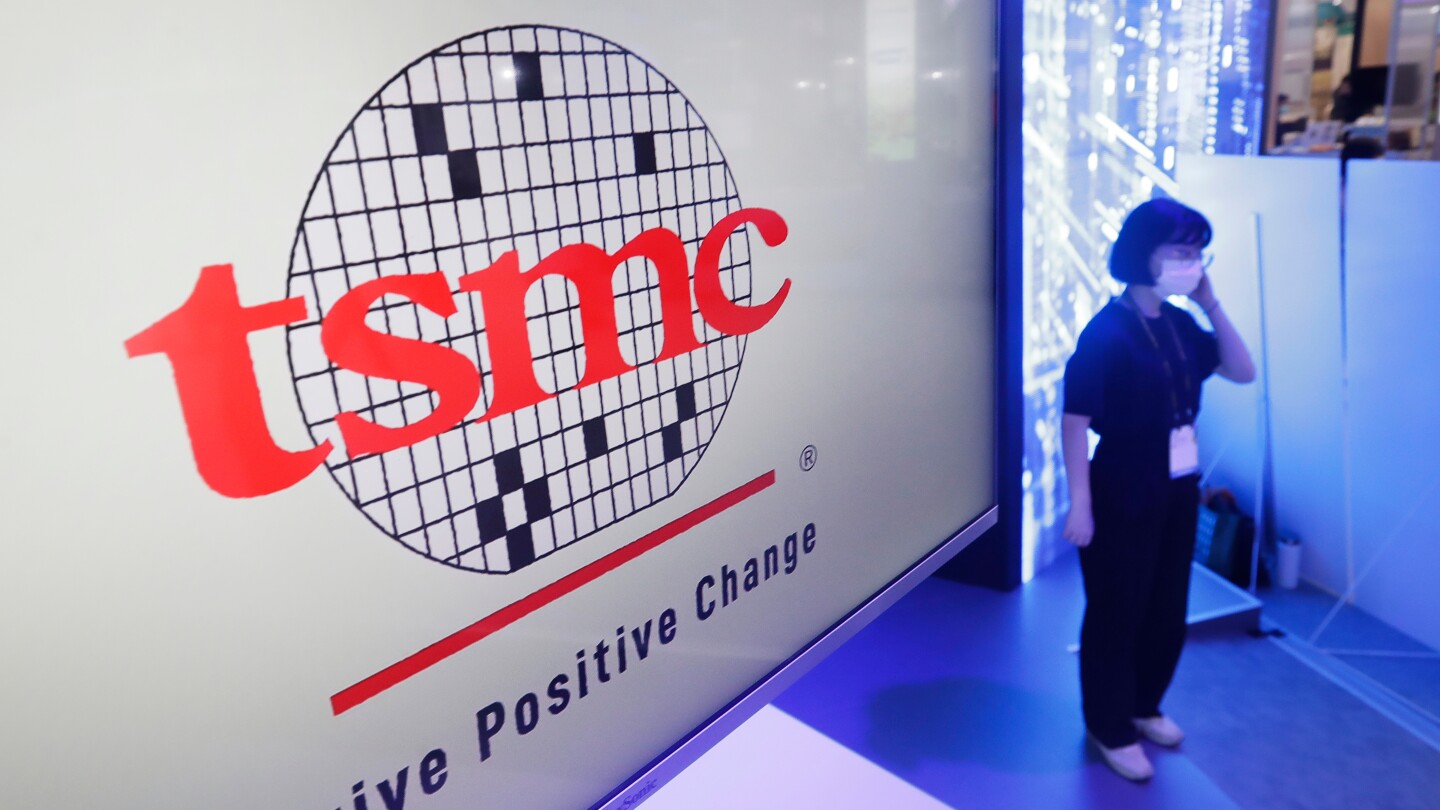
It coincided with an announcement by Taiwan-based TSMC, the world’s largest computer chip maker, that it plans to increase its capital spending by as much as nearly 40% this year. It reported a 35% jump in its net profit for the latest quarter thanks to the boom in artificial intelligence.
TSMC has pledged around $165 billion of investments in the U.S. and said it’s speeding up construction of new plants in Arizona, looking to create a fabrication plant cluster and meet strong demand from clients.
The Commerce Department said that Taiwanese semiconductor producers that invest in the U.S. also will get favorable tariff treatment, including exemptions.
Ryan Majerus, a trade official in Trump’s first administration and in former President Joe Biden’s, said the agreement’s “timing is interesting.’’
The Supreme Court has yet to rule on the legality of Trump’s most sweeping tariffs, which he has used to strong-arm concessions out of other U.S. trading partners. The justices could strike down the tariffs as early as this month.
But Taiwan, facing ongoing threats from China, was eager to reach a deal and strengthen relations with the United States anyway. “Wanting to solidify things with the U.S. probably played a big role here,’’ said Majerus, now a partner at the King & Spalding law firm.
___
AP producer Liu Zheng contributed to this report from Beijing. AP Business Writer Paul Wiseman contributed from Washington.
