


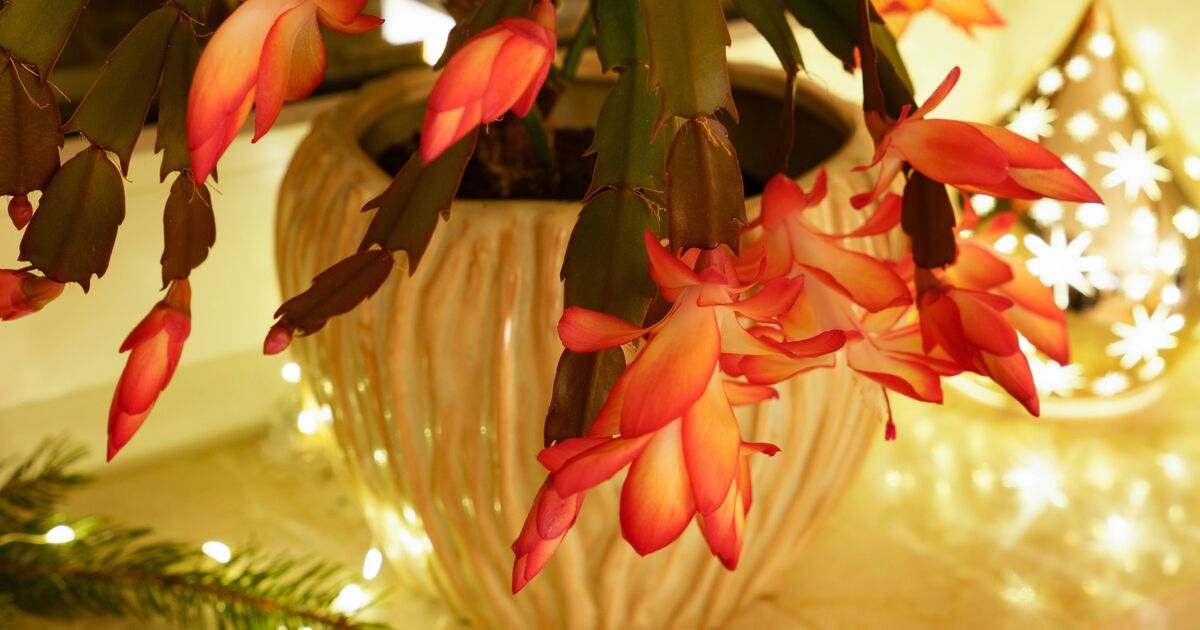
The Christmas cactus, with its vibrant blooms, is a delightful addition to the festive decorations, offering a unique touch alongside the traditional tree and ornaments. These plants burst into bloom during winter, showcasing their stunning petals, but only if they receive the right care.
Nurturing these cacti can be challenging, often leaving garden enthusiasts struggling to coax them into flowering. However, with some expert gardening advice, it becomes much easier to witness their spectacular blossoming. Dr Marisa Y. Thompson, an extension horticulture specialist, has offered her invaluable tips for those keen on extending the blooming period of their Christmas cacti and ensuring their return the following year.
She advises that these plants should be pruned in spring rather than during the festive season to promote timely blooming.
Dr Thompson wrote: “In the spring when the plant is actively growing, you can prune your cactus by cutting between stem segments using clean, sharp shears that do not tear the plant tissue.
“Flower buds develop at the distal edges (ends) of each stem, so by pruning, you are encouraging branching and therefore maximising flower potential next season.”
To maintain their health, Christmas cacti should be positioned away from draughty areas in the home, as winter winds can dry out the plant, making it more challenging to keep in prime condition.
Dr Thompson advised: “Avoid drafty locations near open doors and heater vents. These locations speed the drying of the soil and plants.”
It’s recommended to keep your cacti in a well-lit spot within the home, positioned away from direct sunlight. They thrive in humid conditions, meaning even a bathroom or kitchen environment can help them reach their optimal flowering capability.
The specialist also noted that relocating the plant frequently or subjecting it to temperature fluctuations can cause the developing flower buds to fall off.
Dr Thompson stated: “Keep the plants in a cool location. Cool air slows the ageing of the flowers, so they last longer, but do not let the temperature drop below 50F (10C). Temperature-wise, they are not as fussy as some other seasonal houseplants, such as poinsettia.”
Come next autumn when the plant enters its dormant phase, it will generally require 10 to 12 hours of darkness to produce flowers again, and once the buds emerge you can relocate it to a brighter section of the home.
