


Listen to this article | 6 mins
On Friday, the retirement of Craig Guildford, the chief constable of West Midlands Police in the United Kingdom, was publicly announced. His decision to step down was prompted by what he described as the “political and media frenzy” surrounding the ban on Israeli fans of Maccabi Tel Aviv from their team’s match with Aston Villa in Birmingham.
Days earlier, Home Secretary Shabana Mahmood publicly stated that she had “lost confidence” in Guildford’s leadership after sustained political and media pressure; it was the first time in two decades a home secretary has done so. Ministers and much of the media framed the ban as a moral outrage, even a national disgrace.
This was not a scandal involving corruption, brutality or police cover-ups but a risk assessment. The British media and public officials tore apart the internal advice on which the decision to bar Maccabi Tel Aviv supporters from Villa Park in November was based. In doing so, the British state in effect sided with the fans of an Israeli football club against its own police.
West Midlands Police later acknowledged errors in its assessment. Those mistakes should be noted but be kept in proportion. They do not amount to proof of bad faith, conspiracy or prejudice. An independent review found no evidence that officers were influenced by anti-Semitism or malign intent – a finding that has been largely drowned out by the public outrage machine.
What has also been consistently erased from media coverage is context. A hooligan element within Maccabi Tel Aviv’s fanbase has a long, well-documented history of violent and racist behaviour, including explicitly anti-Palestinian chants. This is neither a marginal claim nor a recent invention. It has been acknowledged for decades, including within Israel itself.
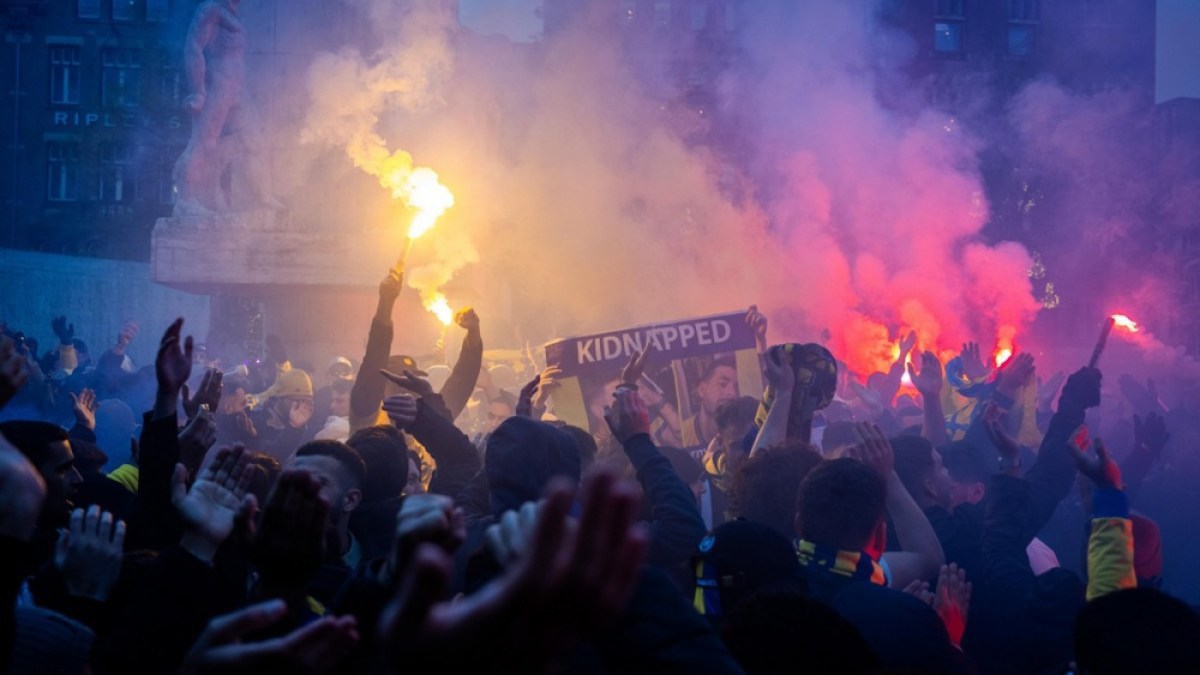
The police risk assessment was informed by violence surrounding a Maccabi Tel Aviv match in Amsterdam in 2024 when unrest spilled into the city, locals were attacked, racist chants glorifying the Israeli military were heard and Palestinian symbols were targeted. This took place amid Israel’s genocide in Gaza at a time of intense global anger over its mass killing, displacement and starvation. Against that backdrop, the decision to err on the side of caution was neither shocking nor sinister. It was policing.
Anti-Semitism is real, dangerous and rising globally, and it must be confronted seriously. But collapsing Jewish identity into support for an Israeli football club and treating any scrutiny of its fanbase as suspect does nothing to combat anti-Semitism. Instead, it weaponises it while casting suspicion on Muslim communities and eroding trust in public institutions.
What makes the political reaction to this case even more revealing is that banning football supporters on safety grounds is not unusual in the UK. British authorities have routinely barred British fans from attending matches at home or abroad based on reputations for violence and disorder.
These collective, preventive measures have long been accepted as normal public-order policing. No ministers have cried discrimination. No police chiefs have been hounded. No national crisis has been declared.
The difference here is not principle. It is politics.
For Palestinians, this episode fits a broader and painfully familiar pattern. For more than two years, Israel has carried out a genocide in Gaza: tens of thousands of people killed, most of the population displaced, homes, hospitals, schools and universities destroyed, and starvation imposed as a method of warfare. International legal experts and human rights organisations have warned of war crimes and crimes against humanity. Britain’s response has been consistent: delay, equivocation and protection.
There has been no arms embargo. No sanctions. No meaningful accountability for Israel.
The pattern revealed in Birmingham is the same one that shapes Britain’s response to Gaza. When Israeli interests are inconvenienced, the state mobilises. When Palestinians are killed, it urges restraint. When those in Britain attempt to obstruct the supply chains of genocide, they are prosecuted. Some now sit in prison. Some are on hunger strike.
This is the reality facing Palestine Action activists today. And it is why the question at the heart of this story cannot be avoided.
If the British government cannot tolerate a policing decision that inconveniences an Israeli football club, it will never confront Israel over mass killing. If it is willing to undermine its own institutions to demonstrate loyalty, it will not deliver justice to those who challenge that impunity.
The football controversy matters not because of what happened at a stadium in Birmingham but because it exposes how power works. It shows whose fears are treated as legitimate, whose suffering demands action and whose lives can be explained away.
For Palestinians, the message is unmistakable. Justice, under these conditions, is not delayed. It is denied.
The views expressed in this article are the author’s own and do not necessarily reflect Al Jazeera’s editorial stance.
