


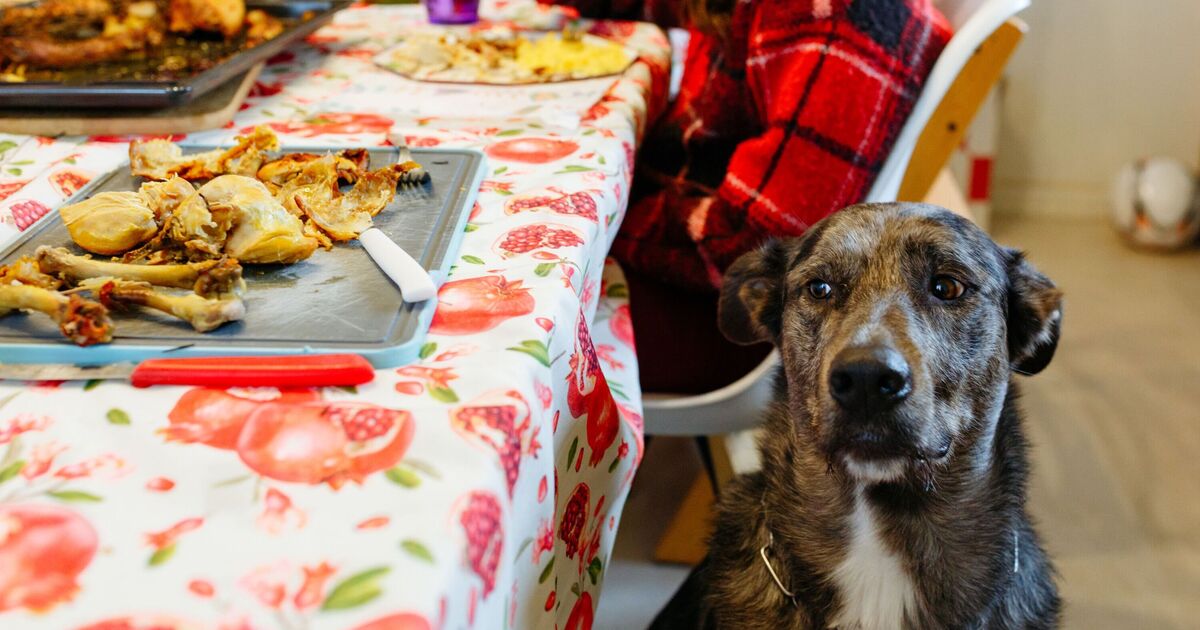
To ensure a festive season that’s jolly for all members of the family, including your four-legged friends, there’s one ingredient you should keep well away from your dogs.
The British Veterinary Association has revealed that 80% of vets encounter at least one case of toxic ingestion during the Christmas period.
Tom Sadler, founder of pet accessory retailer Fur King, has shared some advice on which foods to avoid and how to prepare a dog-friendly Christmas feast. Surprisingly, onions top the list of harmful ingredients. Given onions are used in most stuffings, sausages, and gravies sold during the holiday season, even in powdered form, onions pose a significant risk to dogs.
Veterinarian Veronica Higgs, from Pet MD, warned: “Onions are toxic to dogs and should not be eaten. Whether cooked or raw, all parts of the onion and onion plant are toxic to dogs, including the bulb, leaves, juice, and processed powders. No form of onion should be included in your pet’s diet or treats.”
Sadler pointed out that many stuffings and gravies contain onion, which can harm a dog’s red blood cells, potentially leading to anaemia, lethargy, and breathlessness.
This toxicity extends to all forms of onion – whether raw, cooked, powdered, or dehydrated. Tom cautioned: “Even letting your dog lick the gravy boat could cause problems.
“These foods are also often high in salt, and too much can lead to increased fluid load, causing elevated blood pressure and worsening the signs of heart disease. As the amount of salt increases, this leads to salt toxicity.”
Yet onion isn’t the sole festive hazard facing your four-legged companion. The festive season brings merriment, which frequently involves alcoholic beverages. However, should your beloved pet consume even modest quantities, it may result in vomiting, confusion, tremors, and perilously low blood sugar levels.
Despite numerous foods being off-limits for dogs, they needn’t miss out on the celebrations entirely. Tom has devised a safe, scrumptious and thoroughly festive meal that your canine companions can savour.
Skinless, boneless turkey breast, prepared without seasoning. For those wishing to offer bones, select raw, meaty and easily digestible choices like turkey neck or wings, ensuring constant supervision.
Steamed or boiled carrots alongside leafy greens make excellent choices for your four-legged friend. Plain, mashed sweet potato proves nutritious, packed with vitamins A, C, and B6, whilst being rich in fibre to support healthy digestion. Simmer the plain turkey carcass with any spare bones in water to produce a low-sodium turkey stock.
Tom added: “Teaching your dog a solid ‘leave it’ cue is one of the most important life skills for them to learn, and it’s arguably more important than ‘sit’ or ‘down’. A dog that learns impulse control will be safer in the long run.
“Management is also crucial. If you know your dog gets tempted by food, it’s your responsibility to prevent them from gaining access to it. Put food out of reach and clean up any spills before they can get to it.
“Every year, we hear people saying that their dog has eaten chocolate or consumed alcohol and survived, but that doesn’t mean it’s safe. Toxicity depends on a dog’s size, age, and even genetics, so what one dog can tolerate might make another gravely ill.
“A little preparation goes a long way. Christmas can be chaotic, but if we stay mindful and set boundaries early, our dogs can enjoy the day safely without missing out on the fun.”
