


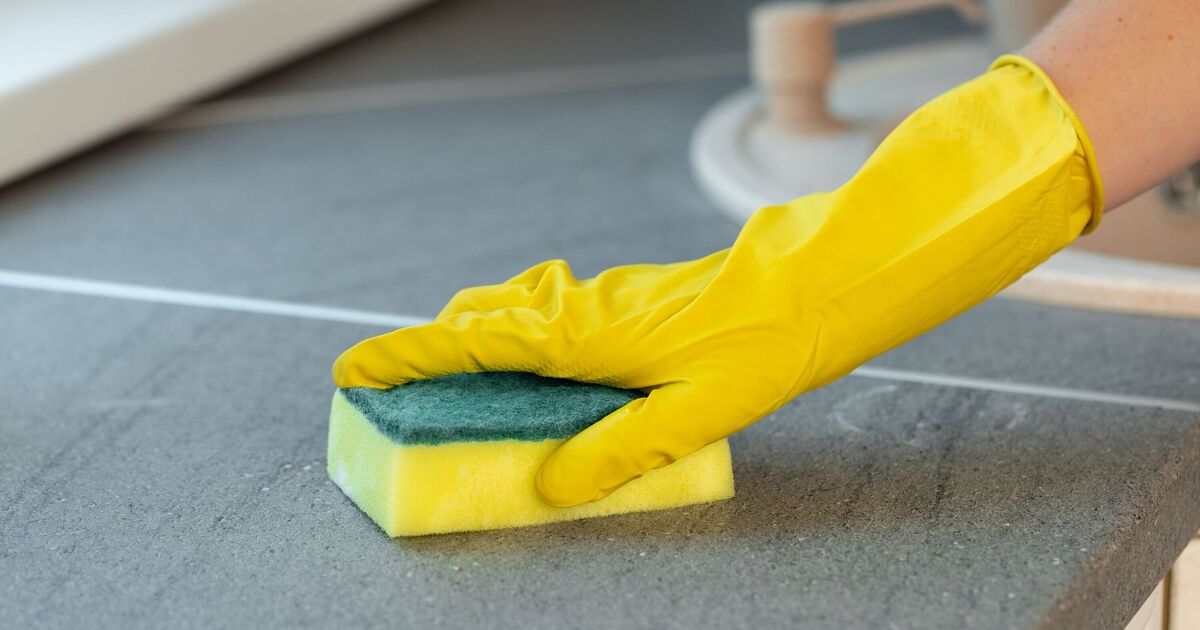
White vinegar is a popular natural cleaning solution, suitable for cleaning a wide range of surfaces. Its acidic nature means it can melt grease and destroy limescale, but it should be used carefully, according to an expert.
Dale Smith, founder of Fence Guru, said: “Vinegar has become this miracle cleaner in people’s minds, but I see the damage it causes all the time. People think that natural means safe for everything, but vinegar’s acidity can permanently ruin expensive surfaces that cost thousands to replace.” With that in mind, Dale has shared which areas of the home you should “never” clean with white vinegar.
Granite, marble and quartz worktops
Expensive stone might look tough, but vinegar can damage the surface of these materials, leaving dull spots that cannot be removed.
Dale said: “I’ve seen beautiful granite kitchens ruined by well-meaning homeowners who thought vinegar was gentler than commercial cleaners.
“Those white marks after cleaning? That’s permanent etching that requires professional restoration or complete replacement.” Instead, use a pH-neutral stone cleaner or simple warm water with a cloth for daily cleaning.
Hardwood floors
Vinegar can strip away the protective coating on hardwood floors, leaving the wood exposed to moisture and stains. Over time, this causes the wood to dull, discolour and potentially warp.
Dale noted: “Your floors lose the shine because you’re literally eating away at the protective layer. Once that coating’s gone, you’re looking at expensive refinishing to restore the surface.”
Natural stone patios and outdoor surfaces
Garden patios made from limescale or sandstone face damage as the acid in vinegar weakens it. Use a mild soap or pressure washer instead.
Washing machines and dishwashers
According to the expert, vinegar actually damages these appliances instead of cleaning them. The acid breaks down components such as rubber seals, gaskets, and hoses, resulting in leaks and costly repairs.
Use descaling products specially designed for your appliances, or check the manual for approved cleaning products.
Cast iron cookware
Vinegar can strip away the protective coating on cast iron, leaving it vulnerable to damage and rust. The seasoning takes time to build up and protects both the metal and your food.
Instead, clean it with coarse salt and a brush, then re-oil to maintain it.
