


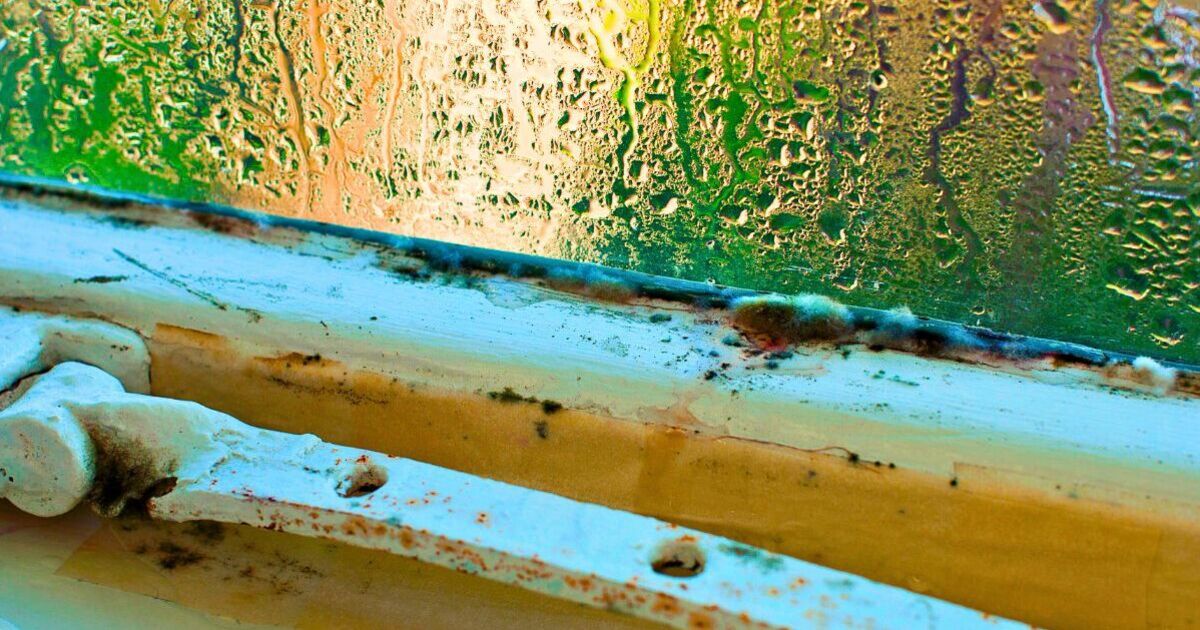
The watery streaks running down a window might seem harmless, but left alone they can quietly grow into a thick and stubborn layer of mould. In winter, condensation can become a serious problem, as it forms when warm air inside your home hits a cold surface, like glass, and turns into droplets of water. Many people use bleach to remove mould, but it cannot deeply penetrate window frames or plaster, so the spores will simply linger and continue to grow back.
However, the experts Window 4 You have shared cleaning mould off windows properly is actually really easy, as all you need a little white vinegar. They said: “The first and most effective solution for getting rid of mould on the windows is a solution of water with vinegar in a ratio of 2:1. Spray on the treated surface, and wait approximately two hours, then rinse thoroughly with warm water. There should be no trace of the mould left. Acid kills the fungus in this case.”
Why should you use vinegar to clean window mould?
White vinegar is often used in salad dressings, but it is actually one of the most effective ways to kill mould due to how acidic it is.
It contains acetic acid, which can soak into porous material like wood or plaster to reach spores and make it difficult for them to regrow.
White vinegar breaks down mould cells at their source, killing them completely with just a few minutes of effort.
You simply need to spray a generous amount of white vinegar on a mouldy window, then leave it for a few hours to give the acetic acid time to work.
Once the time is up, simply wipe down your window with a clean cloth, rinse the area with warm soapy water and the mould should easily come off.
Are there any other natural ways to remove window mould?
The biggest downside to using white vinegar is that it has a very pungent smell, but you can also use a mix of other eco-friendly solutions like tea tree oil and salt.
The expert said: “Other options include using salt or tea tree oil: both are known as effective fungicides. It is also worth using those to wash the windows and window joinery, from time to time, to prevent further mould growth.”
Salt can dehydrate mould cells to stop them spreading, and many people place a bowl of it on their windowsill as a simple way to stop condensation.
Tea tree oil contains terpenes, which is antibacterial and just as effective as completely getting rid of mould.
Using white vinegar, tea tree oil, or salt is a natural way to deal with mould without resorting to any harsh chemical solutions that often give off strong fumes.
